
'%3e%3cg%3e%3cpath%20d='M12.04834,6.05824C12.09325,4.8457799999999995,12.43703,3.78081,13.0715,2.89055C13.7092,1.995784,14.7633,1.3601670000000001,16.2063,1C16.215899999999998,1.0440338,16.2259,1.088092,16.2363,1.131979L16.2363,1.3623509999999999C16.2363,1.884725,16.1084,2.48372,15.856,3.14258C15.5915,3.78052,15.1781,4.38093,14.6291,4.92281C14.1157,5.40028,13.6406,5.71638,13.2207,5.85928C13.0822,5.9003,12.89209,5.94066,12.66255,5.97701C12.45842,6.00853,12.25362,6.03563,12.04834,6.05824ZM12.28933,7.85741C10.6594,7.85741,9.52778,6.42896,7.91997,6.42896C6.31224,6.42896,3,7.89332,3,12.9488C3,18.0043,5.94131,21.2617,6.27029,21.642C6.599209999999999,22.0224,7.36005,23,8.5387,23C9.71744,23,11.00787,22.0715,12.28933,22.0715C13.5707,22.0715,15.1836,23,16.2365,23C17.2895,23,17.7226,22.5747,18.4392,21.8411C19.1558,21.1074,20.5227,18.8686,21,17.5248C20.2137,17.061,18.1298,15.8019,18.1298,12.9488C18.1298,11.0468,18.831200000000003,9.4667,20.2341,8.20853C19.3138,7.02216,18.2464,6.42896,17.0318,6.42896C15.2099,6.42896,13.9193,7.85741,12.28933,7.85741Z'%20fill='%23000000'%20fill-opacity='1'/%3e%3c/g%3e%3c/g%3e%3c/svg%3e)
'%3e%3cg%3e%3cpath%20d='M6.2985500000000005,2L14.60082,10.81153L16.7432,8.537289999999999C13.81573,6.65184,9.89484,4.122529999999999,8.13152,2.985321L6.95017,2.225593C6.74135,2.090554,6.5177700000000005,2.0178354,6.2985500000000005,2ZM5.0312551,3.05499C5.0144537,3.1518100000000002,5,3.24911,5,3.35357L5,20.7675C5,20.8406,5.0138389,20.9085,5.0234395,20.9782L13.4695,12.0125L5.0312551,3.05499ZM18.1511,9.444659999999999L15.7321,12.0125L18.1089,14.5354C19.3682,13.7252,20.2405,13.1626,20.3372,13.1007C20.7653,12.8229,21.007,12.4039,20.9998,11.94614C20.9934,11.49683,20.7516,11.09514,20.340400000000002,10.84799C20.2484,10.79194,19.387999999999998,10.24048,18.1511,9.444659999999999ZM14.60082,13.2134L6.3235600000000005,22C6.48437,21.9703,6.64498,21.9194,6.79859,21.8209C7.01141,21.6833,12.76069,17.9805,16.701,15.4428L14.60082,13.2134Z'%20fill='%23000000'%20fill-opacity='1'/%3e%3c/g%3e%3c/g%3e%3c/svg%3e)

Best Sora Alternative in 2026: Why Dreamface Is the Better Choice
When Sora first appeared, it felt like one of those rare AI moments that genuinely stopped people in their tracks. At the end of 2024, OpenAI’s video product exploded across social media. People were generating cinematic clips, inserting themselves into movie-like scenes, and sharing AI-made videos that looked far beyond what most users thought was possible.
- Sora 2
- AI Video
- AI Video Generator

When Sora first appeared, it felt like one of those rare AI moments that genuinely stopped people in their tracks.
At the end of 2024, OpenAI’s video product exploded across social media. People were generating cinematic clips, inserting themselves into movie-like scenes, and sharing AI-made videos that looked far beyond what most users thought was possible. For a brief moment, Sora looked like the consumer AI video product everyone would be using next.
But hype is not the same thing as habit.
Now that OpenAI has reportedly moved to shut down Sora’s consumer-facing app, developer version, and built-in ChatGPT video features, the real question is no longer whether Sora was impressive. It clearly was.
The real question is this: why would OpenAI walk away from one of its most viral consumer products?
From viral success to a side quest
Sora’s biggest strength may also have been its biggest weakness: it was amazing to try, but harder to keep using.
The core experience was undeniably eye-catching. Turning prompts into cinematic video clips and placing people into stylized scenes made for highly shareable content. It was perfect for demos, social posts, and viral moments.
But a product cannot survive on first impressions alone.
For many users, Sora was something they tried once or twice, admired, and then left behind. The novelty was real, but the repeat use case was much weaker. That is a classic problem in consumer AI: a tool can look magical without becoming essential.
There was also a deeper friction point — trust. Many users are still uncomfortable uploading their own face, personal likeness, or sensitive visual data into AI systems, especially when the long-term handling of that data is unclear. Once the novelty fades, privacy concerns become more visible.
And when a product becomes known more for “wow” moments than everyday value, retention starts to crack.
The real reason may be much bigger than user churn
If declining engagement explains the surface-level problem, the deeper issue is probably strategic focus.
OpenAI is no longer operating like a startup chasing attention. It is operating like a company under enormous pressure to justify valuation, optimize compute allocation, and prioritize businesses that can scale revenue efficiently.
That changes everything.
Video generation is expensive. Extremely expensive.
Generating AI video consumes far more compute than generating text, and often more than images as well. Every consumer video experiment burns serious GPU resources. That may be acceptable in a hype cycle, but it becomes harder to justify when the company is shifting toward coding, enterprise tools, and infrastructure products with clearer monetization.
From that perspective, Sora starts to look less like a flagship business and more like a costly distraction.
If OpenAI believes coding assistants, enterprise APIs, and productivity tools will generate more durable revenue than consumer entertainment video, then cutting Sora is not irrational. It is disciplined.
This does not mean AI video is dead
OpenAI stepping back from Sora does not mean AI video generation is over.
It only means OpenAI may have decided that consumer AI video was not the best battlefield for its next phase.
The broader AI video race is still active. The demand is still there. Creators still want fast, high-quality video generation. Marketers still need short-form content. Teams still want tools that can produce visual assets quickly without the cost and delay of traditional production pipelines.
What users actually need now is not just a famous brand name.
They need a platform that is:
- easier to access
- faster to use
- more flexible in model choice
- high quality in output
- and affordable enough to use every day
That is exactly where Dreamface becomes relevant.
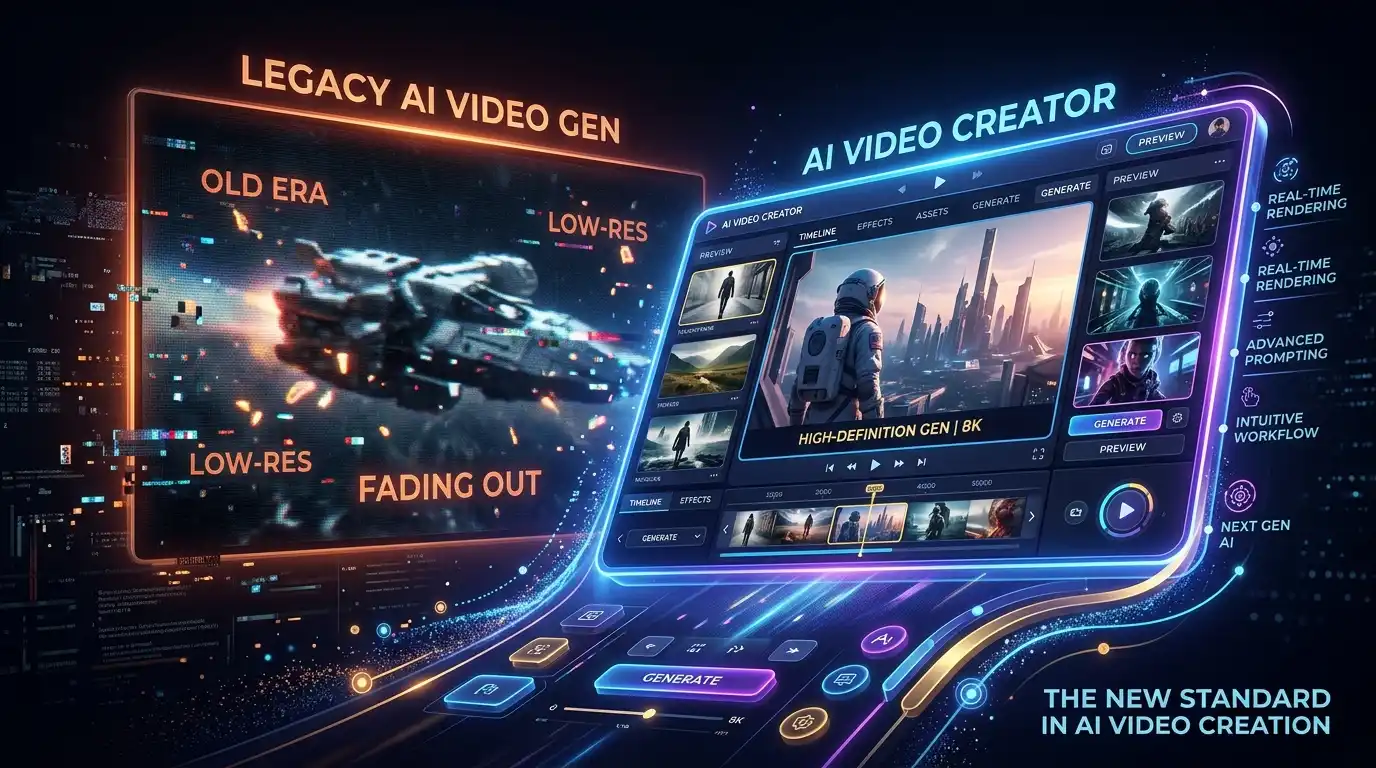
Dreamface is a strong Sora alternative for real users
For users searching for a practical Sora alternative, Dreamface stands out because it is built around actual usability, not just one-time spectacle.
Instead of relying on a single headline feature, Dreamface gives users access to multiple AI video models, letting them choose the generation style and performance that best fit their needs. That matters because different users want different things: some care about speed, some care about realism, some care about consistency, and some just want to test ideas quickly without wasting time.
Dreamface currently offers multiple video models, including:
- Dream Video 1.5
- Seedance 1.5 Pro
- Google VEO3 Fast
- Google VEO3.1 Fast
- Vidu Q2
That range gives Dreamface a clear advantage for users who do not want to be locked into a single workflow.
Why Dreamface works better for everyday AI video creation
The reason many users are now turning to Dreamface is simple: it solves the practical problems that make many AI video tools hard to use consistently.
1. Multiple video models in one place
Instead of forcing users into one generation engine, Dreamface offers a broader creative stack. That means more flexibility, better experimentation, and a better chance of getting the style or motion quality you actually want.
2. Fast generation speed
Speed matters. A lot. In AI video, slow output kills momentum. Dreamface gives users a faster workflow, which is especially important for creators, marketers, and casual users who want results now, not after a long wait.
3. High-definition output
AI video only feels useful when the output looks polished enough to share. Dreamface focuses on high-quality, HD-style video generation that is much more aligned with what users expect from modern content tools.
4. Daily free usage
This is one of the biggest reasons Dreamface is such an attractive Sora alternative. Users can get free attempts every day, which lowers the barrier to entry and makes regular experimentation possible. That is a huge advantage in a market where many tools feel expensive before users have even figured out what works.
5. Better fit for repeat use
The strongest AI products are not the ones people try once. They are the ones people come back to. Dreamface is better positioned for repeat usage because it combines quality, speed, variety, and accessibility in a way that supports daily creation.
The real lesson from Sora
Sora’s story is a reminder that technical leadership alone is not enough.
A product can be visually stunning, culturally viral, and still fail to become a long-term consumer habit. In AI, that gap between “impressive” and “useful” is where many products win or lose.
OpenAI may have concluded that Sora was too expensive, too niche in repeat usage, and too far from the company’s next commercial priorities. That is a valid strategic decision.
But the underlying demand for AI video has not disappeared.
Users still want to create videos faster. They still want cinematic quality. They still want better tools. They just need those tools in a product that feels accessible, flexible, and worth returning to.
That is why the conversation is shifting from “Why did Sora shut down?” to “What is the best Sora alternative now?”
Dreamface may be the best Sora alternative right now
If you are looking for a Sora alternative that is faster, more flexible, and easier to use every day, Dreamface is one of the strongest options available.
With multiple video models, fast generation, high-definition output, and daily free chances to create, Dreamface offers something many users wanted from Sora but could not fully get: a video AI product that is not just exciting, but actually usable.
Sora may have helped define the moment.
But Dreamface is better positioned to serve the next one.
.webp)
DreamFace AI Live Avatar: Always-On AI Character Livestreaming
Turn any character into an always-on live streaming host — from talk shows and quizzes to memorial tributes and late-night companionship — with no one required behind the camera.
By Daniel一Aug 18, 2026- AI Video
- AI Live Avatar
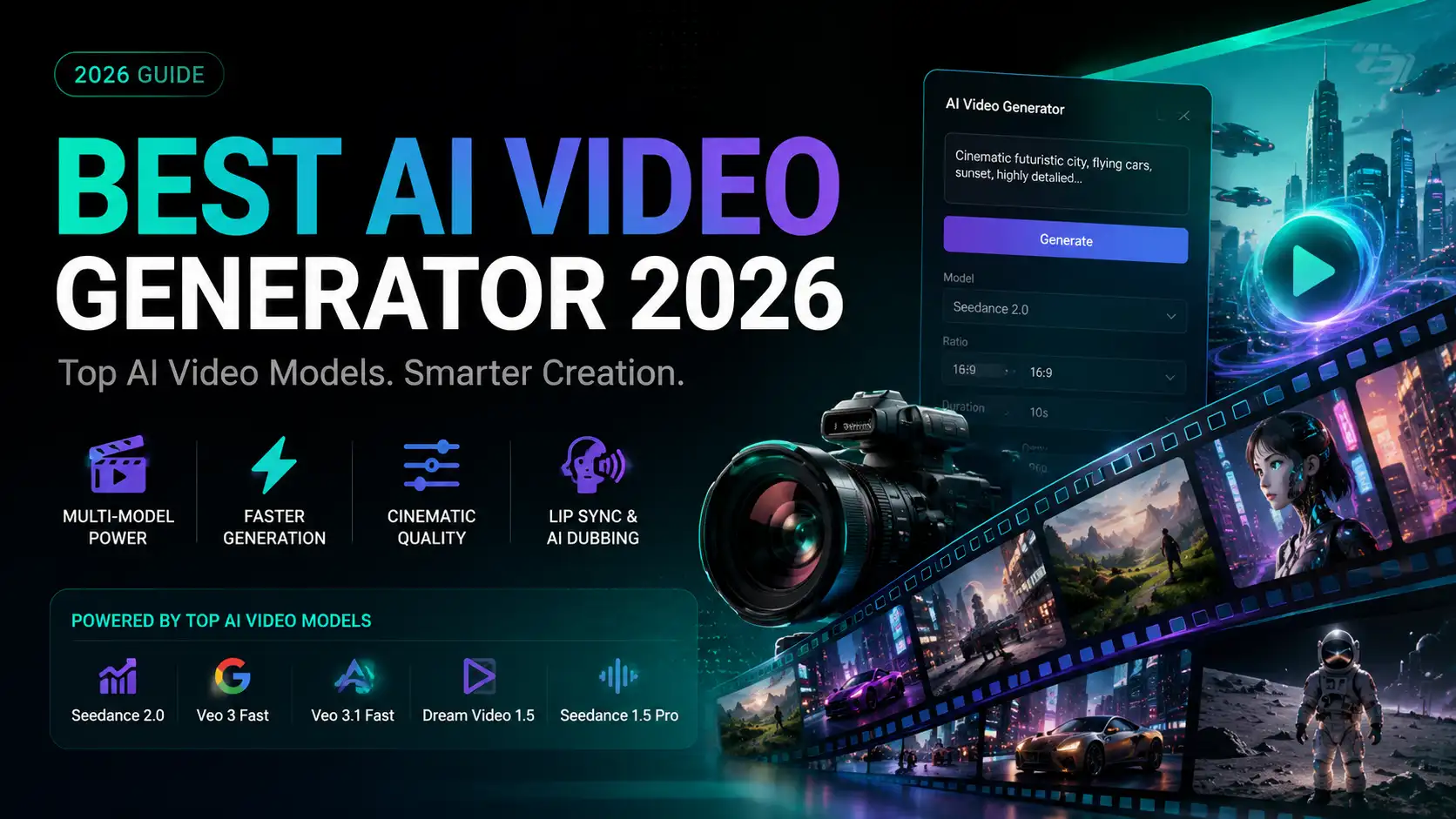
Best AI Video Generator 2026: Why Multi-Model AI Platforms Are Winning
AI video generation has entered a completely new era in 2026. What started as short experimental clips has rapidly evolved into cinematic storytelling, AI anime production, virtual influencers, talking avatars, and fully AI-generated social media content.
By Bentley一May 26, 2026- AI Video Generator
- AI Video

Seedance 2.1 Is Coming: Better Quality, Lower Costs, and a Big Boost for AI Storytelling
The AI video generation race has slowed down a bit recently. Earlier this year, new models were launching almost every week, pushing image and video generation forward at an incredible pace. After the buzz around GPT Image models, the industry has been waiting for the next major leap in AI video.
By stxph一May 23, 2026- AI Video
- Seedance 2.1
- Seedance 2.0