


Google Nano Banana 2 Review: Pro-Grade Image Generation at Flash-Level Pricing
When Google’s CEO Sundar Pichai publicly called Nano Banana 2 “our best image model yet,” it wasn’t just marketing bravado. With immediate deployment across Gemini App, Google Search (in 141 countries), Flow, and preview access via Google AI Studio and Vertex AI, Google made it clear: this isn’t an experimental release.
- Text-to-Image
- AI Image Generator
- Nano Banana 2
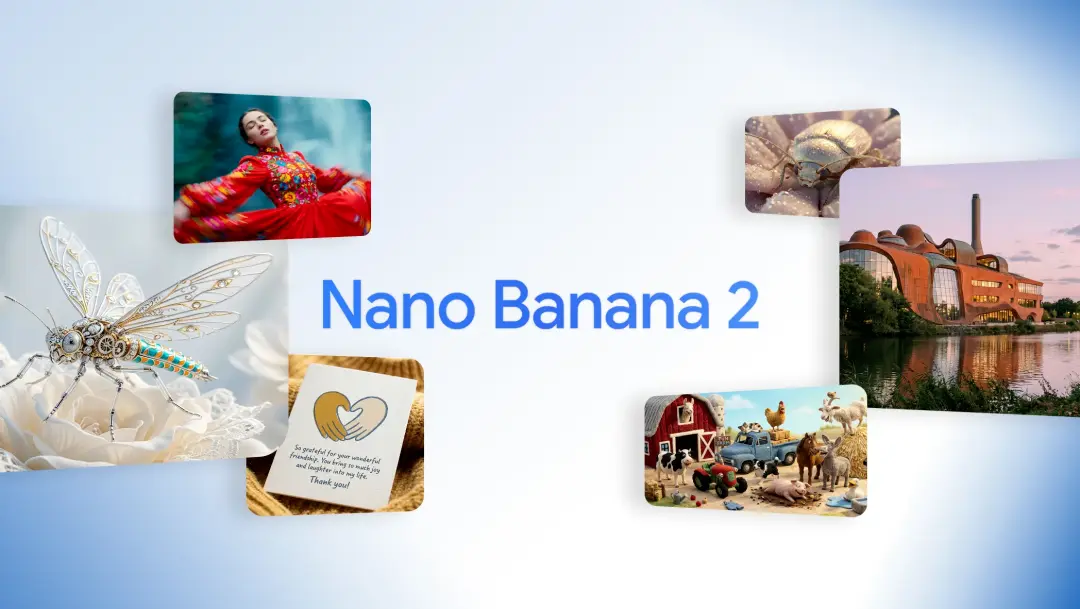
When Google’s CEO Sundar Pichai publicly called Nano Banana 2 “our best image model yet,” it wasn’t just marketing bravado. With immediate deployment across Gemini App, Google Search (in 141 countries), Flow, and preview access via Google AI Studio and Vertex AI, Google made it clear: this isn’t an experimental release.
.webp)
It’s infrastructure.
And the headline positioning says it all:
Pro-level quality. Flash-tier pricing.
But beyond the slogan, what actually changed? After analyzing early demos, community testing, and technical claims, it’s clear that Nano Banana 2 represents not just a visual upgrade—but a structural shift in how image generation is architected and deployed.
1. Not Just Better Images — A Different Capability Stack
Nano Banana 2 isn’t merely sharper. It integrates:
- Gemini’s world understanding
- Real-time web search grounding
- Live image retrieval
- High-resolution synthesis (2K / 4K)
This means it can generate images that reflect current real-world conditions, not just generic approximations.
The “Window Seat” Example
Pichai demonstrated a simple but revealing case:
Pick any location in the world. Ask for the view from a window seat there.
The model:
- Retrieves contextual geographic data
- Pulls real-time weather
- Generates a high-fidelity exterior scene
- Outputs at up to 4K resolution
This is no longer static diffusion. It’s contextualized generation.
Real-Time Visual Grounding
Users tested the model’s search capability with an interesting case: identifying and generating a realistic wren before creating a wallpaper.
Prompt (translated from original):
Use image search to find an accurate image of a wren. Create an elegant wallpaper (3:2 ratio), with a natural top-to-bottom gradient, keeping it minimalist.
.webp)
The model first resolves what a wren actually looks like, then generates the design.
This “search → understand → generate” pipeline is a quiet but important shift.
2. Text in Images: Finally Commercial-Ready?
Text rendering remains one of the hardest problems in image generation.
Nano Banana 2 is explicitly positioned as:
- Clear
- Readable
- Commercially usable
- Stable under complex layout conditions
.webp)
Ethan Mollick (Wharton professor, early access tester) noted:
“It’s not perfect, but it’s the first model that can handle extremely complex images and charts with a relatively high degree of consistency.”
He tested it with this instruction:
“show me a where's waldo set in ancient Venice, but instead of waldo it is an otter wearing a blue striped pilots outfit.”
.webp)
The result?
- Highly detailed scene
- Only one otter (impressive object control)
- Coherent narrative composition
.webp)
There were still minor flaws (e.g., a boy with an odd tail), but the multi-entity orchestration was notably stable.
3. Speed + Pricing: The Real Disruption
Users report:
- 4K image generation in under one minute
- Lower pricing across the board
Compared to the Pro tier:
- Images: 25–50% cheaper
- Text tokens: 70–80% cheaper
That’s where the slogan comes from:
Pro-level quality at Flash-level pricing.
.webp)
If this pricing structure holds, it dramatically lowers the threshold for high-frequency visual generation.
4. Character & Object Consistency — The Breakthrough Designers Care About
Community testing highlights one standout improvement: subject consistency.
We tested with a continuity-heavy prompt:
Prompt:
Keep all characters and objects exactly the same as before (left image). Rearrange the scene so five characters sit around a round table, interacting naturally. All nine objects must remain present and clearly visible. Cinematic lighting, medium shot, photorealistic.
.webp)
.webp)
Google claims:
- Up to 5 characters maintained consistently
- Up to 14 objects preserved with fidelity
This matters.
When character consistency stops collapsing between frames, the following become viable:
- Storyboarding
- Serialized ads
- Narrative sequences
- IP visual asset automation
Previously, identity drift made these workflows unreliable.
5. Tighter Instruction Following
Nano Banana 2 handles multi-layer prompts with noticeably better compliance.
One blogger joked:
“Designers, I think we’re finished.”
The model demonstrates improved execution in:
- Camera language
- Scene structure
- Multi-reference blending
Example test:
Prompt:
Here are 3 reference images and a simple instruction: This demonstrates 35mm, 50mm, and 85mm focal lengths, with apertures f/1.2 and f/2.0.
.webp)
Users commented that this may be the first model to genuinely understand how to simulate wide-angle close-ups correctly..webp)
This level of photographic literacy is subtle — but powerful.
6. Extreme Aspect Ratios + Scalable Resolution
Nano Banana 2 supports:
- Standard ratios
- Extreme 1:8 and 8:1 banners
- 512px quick mode
- Full 4K output
.webp)
The 512px fast mode is designed for:
- High-frequency iteration
- Pipeline automation
- Batch generation
Even without pushing to 8:1 extremes, many panoramic outputs already look striking.
7. Visual Fidelity: Micro-Detail Is Noticeably Upgraded
Speed didn’t come at the cost of realism.
Improvements include:
- Livelier lighting
- Richer texture rendering
- Sharper micro-details
Example observations:
- Individual eyelashes clearly separated
- Visible capillaries in the eye
- Window reflections inside the iris
.webp)
Skin realism:
- Visible pores
- Natural redness on cheeks and nose from cold air
.webp)
These are no longer “AI-ish” details — they feel optically grounded.
8. Creative Experiments: Beyond Conventional Use
Users quickly began stress-testing boundaries.
One creator uploaded a casual snapshot of a children’s book titled How to Hold Animals and prompted:
“Show the jellyfish page from this book.”
.webp)
The model generated what appeared to be page 42 about jellyfish — matching layout, typography, and illustration style as if scanned.
Another experiment:
Prompt:
Imitate your handwriting and write a poem.
.webp)
This suggests cross-modal pattern replication that moves beyond simple image synthesis.
9. Advertising Infrastructure Integration
Reports indicate that Google Ads is already integrating this capability.
That’s significant.
This isn’t just about better images.
It signals that image generation is entering core production infrastructure for advertising.
When a generative model plugs directly into ad pipelines:
- Asset generation becomes automated
- Variant testing scales
- Creative cycles shrink dramatically
10. The Bigger Strategy: Systematic Downward Migration
The macro-strategy is becoming clearer.
Google isn’t just improving visual quality.
It is:
- Embedding image generation into high-frequency platforms
- Lowering Pro-tier capability into Flash-tier pricing
- Normalizing generative output as infrastructure
When Pro-level capability systematically moves downstream, usage frequency doesn’t increase linearly.
It jumps.
Final Take
Nano Banana 2 may not be perfect.
But for the first time, we’re seeing:
- High consistency
- Real-time grounding
- Commercial-grade typography
- Photographic literacy
- Extreme format control
- Infrastructure-level integration
- Aggressive pricing compression
If Nano Banana 1 was iterative progress,
Nano Banana 2 feels like operational maturity.
And when generation becomes fast, cheap, and reliable —
it stops being a novelty.
GPT Image 2.5 Prompting Guide: 4 Real Examples for Creators
A campaign image can look beautiful and still miss the brief. The headline might compete with a face, a product diagram might become unreadable on mobile, or an outfit edit might change more than the clothes.
By Skylar一Sep 18, 2026- Text-to-Image
- AI Image Generator
- GPT Image 2.5
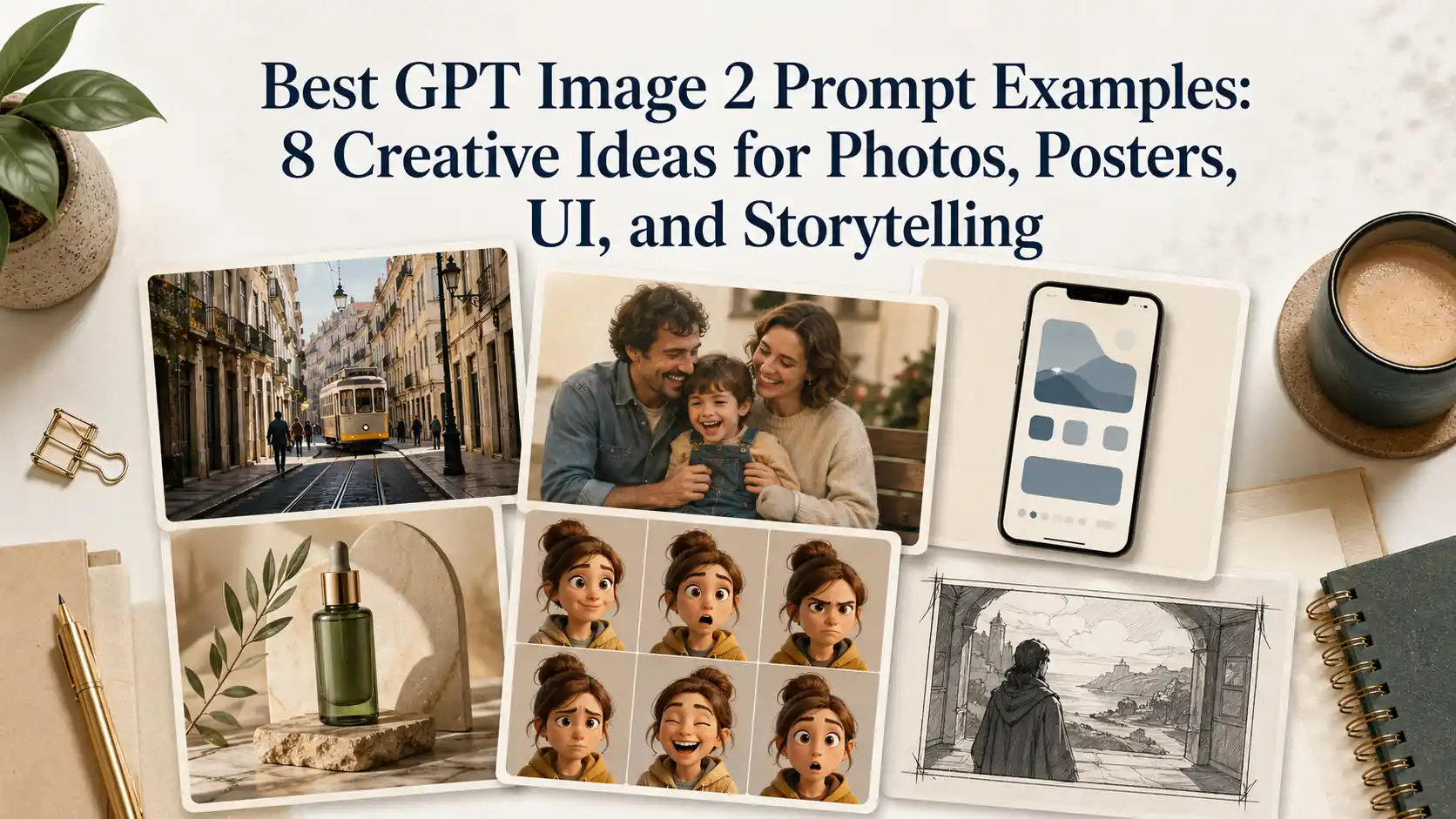
Best GPT Image 2 Prompt Examples: 8 Creative Ideas for Photos, Posters, UI, and Storytelling
Explore 8 GPT Image 2 prompt examples for photos, posters, UI mockups, characters, storytelling, and image editing, with tips to adapt each idea.
By Gabriel一Apr 27, 2026- Text-to-Image
- ChatGPT
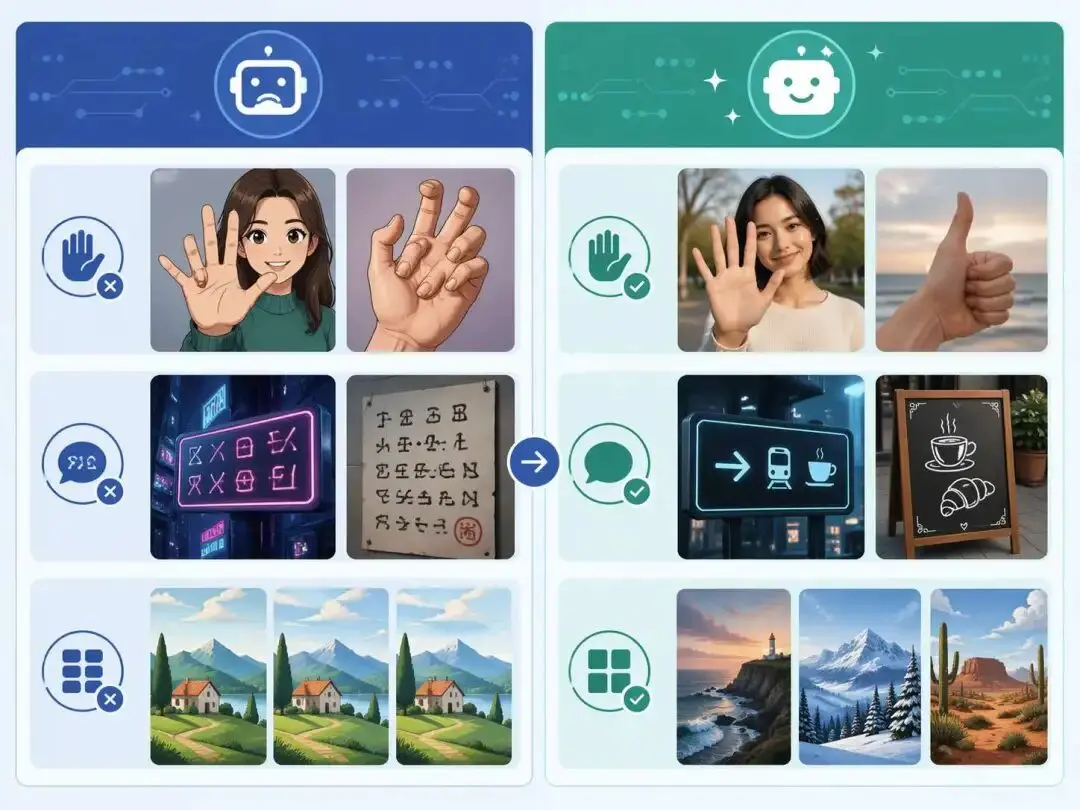
ChatGPT Image 2 Review: Real Tests Reveal What Actually Changed
If you’ve used AI image generators before, you already know the frustration. Hands often look unnatural, text turns into gibberish, and prompts keep getting longer while results remain inconsistent. For a long time, AI image generation felt less like using a tool and more like playing a lottery.
By Zoe一Apr 23, 2026- GPT Image 2
- AI Image Generator
- GPT-4o Image