
'%3e%3cg%3e%3cpath%20d='M12.04834,6.05824C12.09325,4.8457799999999995,12.43703,3.78081,13.0715,2.89055C13.7092,1.995784,14.7633,1.3601670000000001,16.2063,1C16.215899999999998,1.0440338,16.2259,1.088092,16.2363,1.131979L16.2363,1.3623509999999999C16.2363,1.884725,16.1084,2.48372,15.856,3.14258C15.5915,3.78052,15.1781,4.38093,14.6291,4.92281C14.1157,5.40028,13.6406,5.71638,13.2207,5.85928C13.0822,5.9003,12.89209,5.94066,12.66255,5.97701C12.45842,6.00853,12.25362,6.03563,12.04834,6.05824ZM12.28933,7.85741C10.6594,7.85741,9.52778,6.42896,7.91997,6.42896C6.31224,6.42896,3,7.89332,3,12.9488C3,18.0043,5.94131,21.2617,6.27029,21.642C6.599209999999999,22.0224,7.36005,23,8.5387,23C9.71744,23,11.00787,22.0715,12.28933,22.0715C13.5707,22.0715,15.1836,23,16.2365,23C17.2895,23,17.7226,22.5747,18.4392,21.8411C19.1558,21.1074,20.5227,18.8686,21,17.5248C20.2137,17.061,18.1298,15.8019,18.1298,12.9488C18.1298,11.0468,18.831200000000003,9.4667,20.2341,8.20853C19.3138,7.02216,18.2464,6.42896,17.0318,6.42896C15.2099,6.42896,13.9193,7.85741,12.28933,7.85741Z'%20fill='%23000000'%20fill-opacity='1'/%3e%3c/g%3e%3c/g%3e%3c/svg%3e)
'%3e%3cg%3e%3cpath%20d='M6.2985500000000005,2L14.60082,10.81153L16.7432,8.537289999999999C13.81573,6.65184,9.89484,4.122529999999999,8.13152,2.985321L6.95017,2.225593C6.74135,2.090554,6.5177700000000005,2.0178354,6.2985500000000005,2ZM5.0312551,3.05499C5.0144537,3.1518100000000002,5,3.24911,5,3.35357L5,20.7675C5,20.8406,5.0138389,20.9085,5.0234395,20.9782L13.4695,12.0125L5.0312551,3.05499ZM18.1511,9.444659999999999L15.7321,12.0125L18.1089,14.5354C19.3682,13.7252,20.2405,13.1626,20.3372,13.1007C20.7653,12.8229,21.007,12.4039,20.9998,11.94614C20.9934,11.49683,20.7516,11.09514,20.340400000000002,10.84799C20.2484,10.79194,19.387999999999998,10.24048,18.1511,9.444659999999999ZM14.60082,13.2134L6.3235600000000005,22C6.48437,21.9703,6.64498,21.9194,6.79859,21.8209C7.01141,21.6833,12.76069,17.9805,16.701,15.4428L14.60082,13.2134Z'%20fill='%23000000'%20fill-opacity='1'/%3e%3c/g%3e%3c/g%3e%3c/svg%3e)

AI Daily: The Latest AI Trends and Updates – July 21
This week’s developments reveal a fast-escalating race in AI autonomy, open-source performance, and global market influence. Manus AI has emerged as a serious challenger in the agent space, outperforming ChatGPT in real-world tasks.
- Meta
- AI Daily
- Grok
This week’s developments reveal a fast-escalating race in AI autonomy, open-source performance, and global market influence. Manus AI has emerged as a serious challenger in the agent space, outperforming ChatGPT in real-world tasks. Meanwhile, China's open-source community is breaking global rankings with Kimi K2, and Elon Musk is venturing into kid-friendly AI. NVIDIA’s CEO signals deeper China engagement, and Meta’s elite team composition offers new insights into the competitive landscape. Let’s dive into the five major stories shaping the AI world right now.
Manus AI Agent Outperforms ChatGPT in Real-World Task Testing
Manus AI has released a demo comparing its general-purpose AI agent against OpenAI’s ChatGPT Agent using identical prompts. The results show that Manus delivers faster, more reliable, and more practical task execution—without requiring manual prompt engineering. The company credits its performance gains to optimized context design and streamlined interaction handling. While feedback on Manus is largely positive, some users have raised concerns about its credit-based usage system.
Commentary: This head-to-head marks a turning point in the agent arms race. Manus’ efficiency without fine-tuning highlights how critical architecture and design can be—raising the bar for future autonomous AI systems.
Kimi K2 Becomes World’s Top Open-Source LLM, Surpassing DeepSeek
The Chinese-developed Kimi K2 has overtaken DeepSeek to become the world’s highest-ranked open-source LLM and now ranks fifth overall globally, just behind several leading closed-source models. Kimi K2 builds on the DeepSeek V3 framework, with architectural tweaks such as increased expert layers, halved attention heads, and selective dense retention. With both top-ranked open-source models now hailing from China, the traditional belief that open models lag in performance is rapidly eroding.
Commentary: Kimi K2’s rise is a milestone for open-source AI. China’s breakthroughs in this space signal that open-source innovation can rival—even outpace—proprietary giants on the global stage.
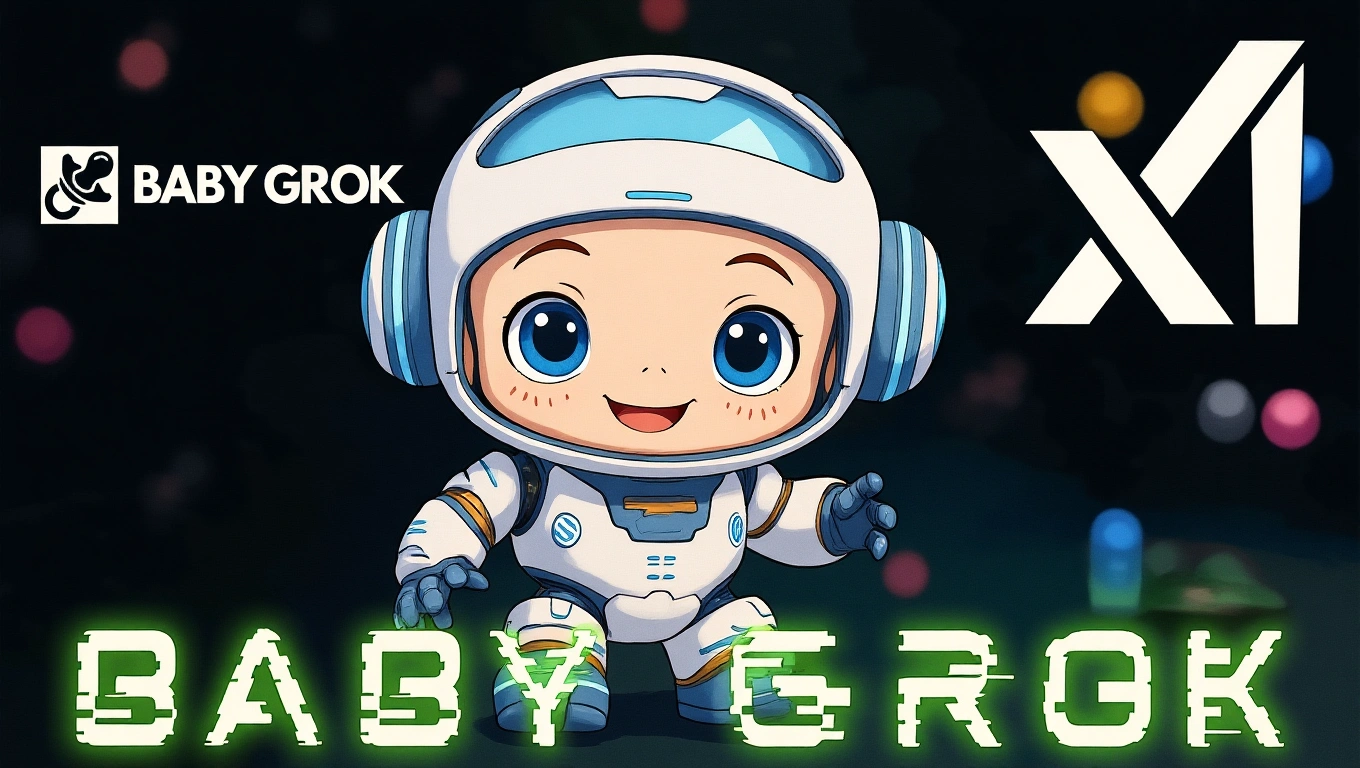
Musk Announces Child-Friendly AI App “Baby Grok”
On July 20, Elon Musk announced via X (formerly Twitter) that xAI will develop a kid-friendly AI application called Baby Grok. While specific features are still under wraps, Musk emphasized the app’s commitment to safe, friendly content for children. This follows Grok’s recent expansion into emotionally interactive AI companions.
Commentary: Baby Grok reflects the emerging trend of segmenting AI experiences by age group. As AI becomes more ubiquitous, child-safe and purpose-built interfaces will be essential for responsible deployment.

NVIDIA CEO Jensen Huang: China’s AI Will Thrive—with or without Us
In an interview with CCTV, NVIDIA CEO Jensen Huang said China’s AI industry will not be hindered by U.S. policies or NVIDIA’s presence. He praised Huawei’s capabilities and revealed that he met with Xiaomi CEO Lei Jun during his visit to China. Their partnership, which began with mobile tech, now spans AI and autonomous driving projects.
Commentary: Huang’s remarks highlight the growing independence and confidence of China’s AI ecosystem. His meetings suggest that collaboration—not isolation—will likely shape the next chapter of global AI development.
Meta’s Superintelligence Team Revealed: 50% of Members Are Chinese
VC investor Deedy Das posted a chart revealing the composition of Meta’s Superintelligence Lab: 44 members in total, with 50% of them reportedly of Chinese origin and 40% having previous experience at OpenAI. The lab is Meta’s internal AGI effort, focused on building foundational AI models at scale.
Commentary: The team breakdown underscores two key trends: intense talent migration from OpenAI to Meta, and the continued global mobility of top-tier Chinese AI researchers. In the race to AGI, elite talent may matter more than scale.

AI Daily: The Latest AI Trends and Updates – August 1
This week, the AI world saw breakthroughs across space, intimacy, robotics, and revenue. Google DeepMind turned Earth into a real-time digital twin, while Elon Musk teased an AI boyfriend. Apple is opening its wallet for strategic AI bets, humanoid robots are doing your laundry, and Microsoft just posted record-breaking AI-fueled revenue. Here’s your rundown.
By Scarlett一Aug 01, 2025- AI Daily
- DeepMind
- Apple
AI Daily: The Latest AI Trends and Updates – July 31
This week’s AI landscape spans across record-breaking revenues, massive infrastructure investments, and profound industry disruption. OpenAI hits stunning new milestones in revenue and user scale, while Google DeepMind’s AlphaEarth aims to redefine Earth observation.
By Luna一Jul 31, 2025- AI Daily
- OpenAI
- DeepMind
AI Daily: The Latest AI Trends and Updates – July 30
This week’s AI headlines mark a shift from mere productivity to immersive experience. OpenAI unveiled a new “Learning Mode” that brings Socratic-style reasoning into ChatGPT, transforming it into a thoughtful learning companion. Meanwhile, AI video generation enters a new phase of competition, as Google and xAI go head-to-head with cinematic-quality tools.
By Kingston一Jul 30, 2025- AI Daily
- OpenAI
- NVIDIA