


How to Set Personality and Tone of an AI Avatar: A Practical Guide for Realistic Video Creation
- Avatar Video
- AI Video
- Advanced Avatar

As AI avatars become more common in marketing, education, and content creation, visual realism alone is no longer enough.
What makes an AI avatar feel believable is not just how it looks — but how it sounds, behaves, and communicates.
This is where personality and tone come in.
This guide explains how to set the personality and tone of an AI avatar, what factors actually influence the result, and how to avoid the most common mistakes that make AI avatars feel unnatural or inconsistent.
How to Set Personality & Tone of an AI Avatar
Direct Answer:
" Personality and tone in an AI avatar are set by aligning voice, language style, facial expression, pacing, and context. "
Rather than a single setting, they emerge from how audio input, script structure, emotional intent, and visual behavior work together across a video.
In practice, tone and personality are shaped more by input design and consistency than by a single “personality toggle.”
What “Personality” and “Tone” Mean for AI Avatars
Although often used interchangeably, personality and tone serve different roles.
1. Personality: The Character Identity
Personality refers to the avatar’s perceived traits over time, such as:
- friendly or formal
- confident or calm
- energetic or reserved
- professional, playful, or empathetic
Personality should remain consistent across videos, especially for branded or recurring avatars.
2. Tone: The Situational Expression
Tone describes how the avatar communicates in a specific context:
- explanatory vs promotional
- serious vs conversational
- supportive vs authoritative
Tone can and should change depending on the scenario, even when the underlying personality stays the same.
The Core Elements That Define Personality and Tone
Setting personality and tone effectively depends on controlling a few key elements.
1. Voice Selection and Delivery
Voice is the strongest signal of personality.
Key factors include:
- pitch and timbre
- speaking speed
- clarity and emphasis
- emotional range
A calm, slower voice conveys trust and professionalism.
A faster, expressive voice suggests energy and enthusiasm.
Changing the voice often has a greater impact on perceived personality than changing the avatar’s appearance.
2. Script Style and Language Choice
The same voice can feel very different depending on the script.
Consider:
- sentence length (short vs detailed)
- vocabulary complexity
- use of contractions (“you’re” vs “you are”)
- directness vs storytelling
Scripts that are written like human speech tend to produce more natural avatars than scripts written like formal documentation.
3. Facial Expression and Motion Intensity
Subtle visual behavior reinforces tone.
- Neutral expressions suit informational content
- Slight smiles increase approachability
- Excessive motion can feel artificial or distracting
For most use cases, less expressive but stable facial movement feels more realistic than exaggerated animation.
4. Pacing and Timing
Personality is also communicated through rhythm.
- Pauses signal confidence or empathy
- Faster pacing suggests excitement
- Even pacing supports clarity and authority
Inconsistent pacing can break immersion, even when lip-sync is accurate.
Common Personality and Tone Profiles for AI Avatars
Most effective AI avatars fall into a few practical profiles:
- Professional explainer: calm voice, neutral expression, steady pacing
- Friendly guide: warm voice, conversational language, light expression
- Brand spokesperson: confident tone, consistent phrasing, controlled emotion
- Educator or trainer: clear articulation, structured delivery, supportive tone
Choosing a profile before generating videos helps maintain consistency.
What Often Goes Wrong When Setting Personality
Many AI avatars feel unnatural not because of technical limits, but because of mismatched inputs.
Common mistakes include:
- energetic scripts paired with monotone voices
- formal language delivered with casual facial expression
- excessive emotional motion in informational videos
- changing tone drastically between videos for the same avatar
Personality breaks when voice, script, and visuals send conflicting signals.
Who Needs to Set Personality and Tone Most Carefully
Personality and tone matter most in:
- marketing and brand videos
- educational and onboarding content
- recurring social media avatars
- multilingual or localized messaging
In these cases, consistency builds familiarity and trust over time.
How to Choose Tools That Support Personality Control
When selecting an AI avatar platform, look for:
- flexible voice options
- support for custom audio input
- stable facial expressions
- predictable results across multiple generations
Tools designed for workflow consistency, rather than one-off demos, make it easier to maintain a defined personality.
DreamFace’s Approach to Personality-Driven AI Avatars
DreamFace focuses on practical AI avatar creation where voice, expression, and delivery work together to support consistent tone and personality.
By emphasizing stable talking avatars and controlled motion, DreamFace enables creators and teams to produce videos that feel coherent across multiple pieces of content, rather than isolated demos.
Frequently Asked Questions
- Can AI avatars have different personalities?
Yes. Personality emerges from voice choice, script style, and visual behavior rather than a single setting.
- Is personality the same as tone?
No. Personality is the consistent character identity, while tone adapts to the situation.
- Can tone change between videos?
Yes, as long as the core personality remains consistent.
- Do I need technical skills to set personality?
No. Most adjustments come from script design, voice choice, and pacing rather than technical configuration.
Key Takeaway
Setting the personality and tone of an AI avatar is less about toggling options and more about designing inputs intentionally.
When voice, script, expression, and pacing align, AI avatars feel natural and credible.
When they conflict, even high-quality visuals can feel artificial.
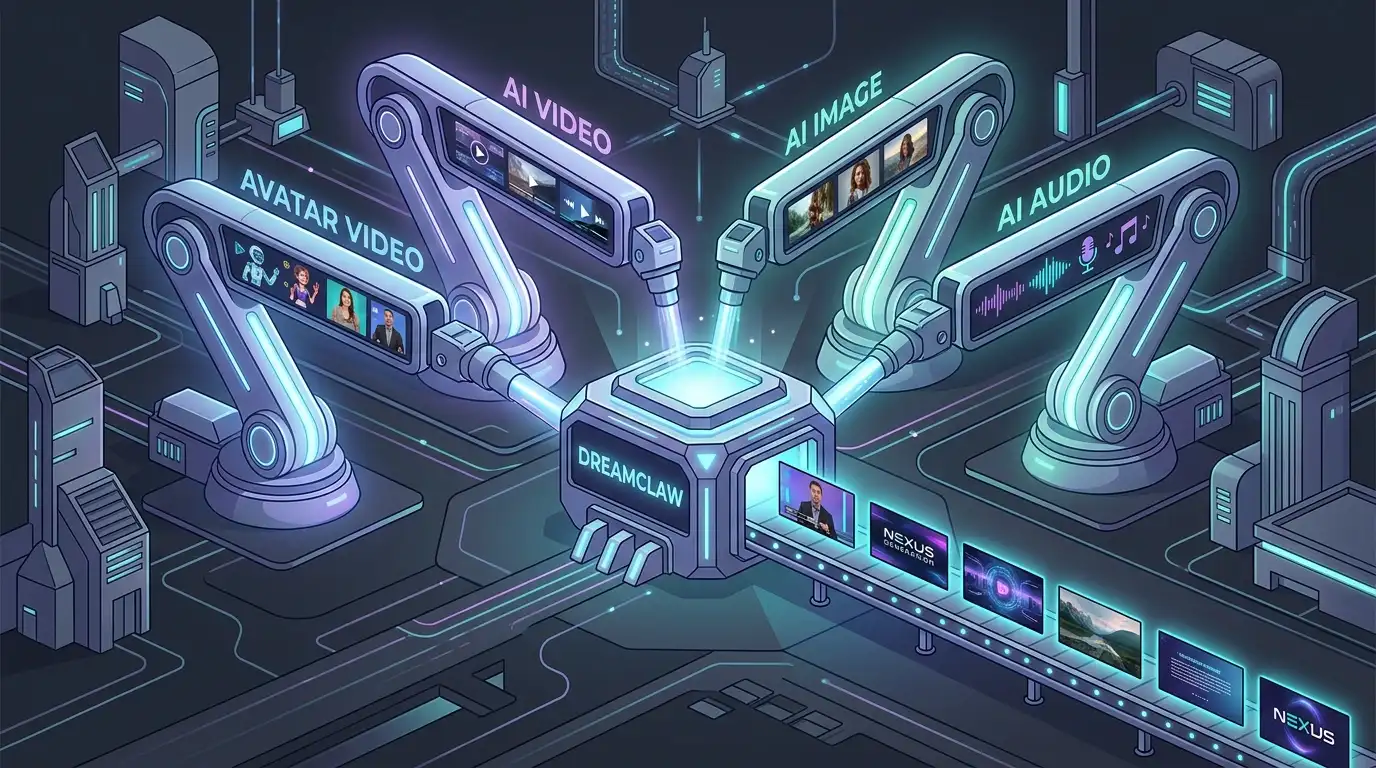
DreamClaw Agent: The All-in-One AI Automation Engine for DreamFace
Mar 04, 2026.jpg)
Seedance 2.0 Prompt Guide: The Ultimate Template for Cinematic AI Videos
Mar 03, 2026
Seedance 2.0 Prompt Guide: The Complete 2026 AI Video Creation Handbook
Feb 28, 2026
Google Nano Banana 2 Review: Pro-Grade Image Generation at Flash-Level Pricing
Feb 26, 2026
Seedance 2.0 Prompt Guide: The Ultimate Template for Cinematic AI Videos
Stop generating "slideshow" videos. This guide provides a creator-first framework for Seedance 2.0, focusing on the two pillars of high-quality AI video: logical structure and cinematic camera movement. Learn how to move beyond basic descriptions by using multi-shot templates, emotional modifiers, and stability constraints to create professional, immersive content. Stop asking if your prompt is detailed—start asking if your video is worth watching.
By Kitty 一 Jan 12, 2026- AI Video
- Text-to-Video
- seedance 2.0
- Image-to-Video
Seedance 2.0 Prompt Guide: The Complete 2026 AI Video Creation Handbook
In February 2026, ByteDance officially released its latest AI video generation model — Seedance 2.0. Dubbed by many in the industry as “the most powerful AI video tool on Earth,” Seedance 2.0 is rapidly reshaping the video creation landscape.
By Kitty 一 Jan 12, 2026- AI Video
- seedance 2.0
- Text-to-Video
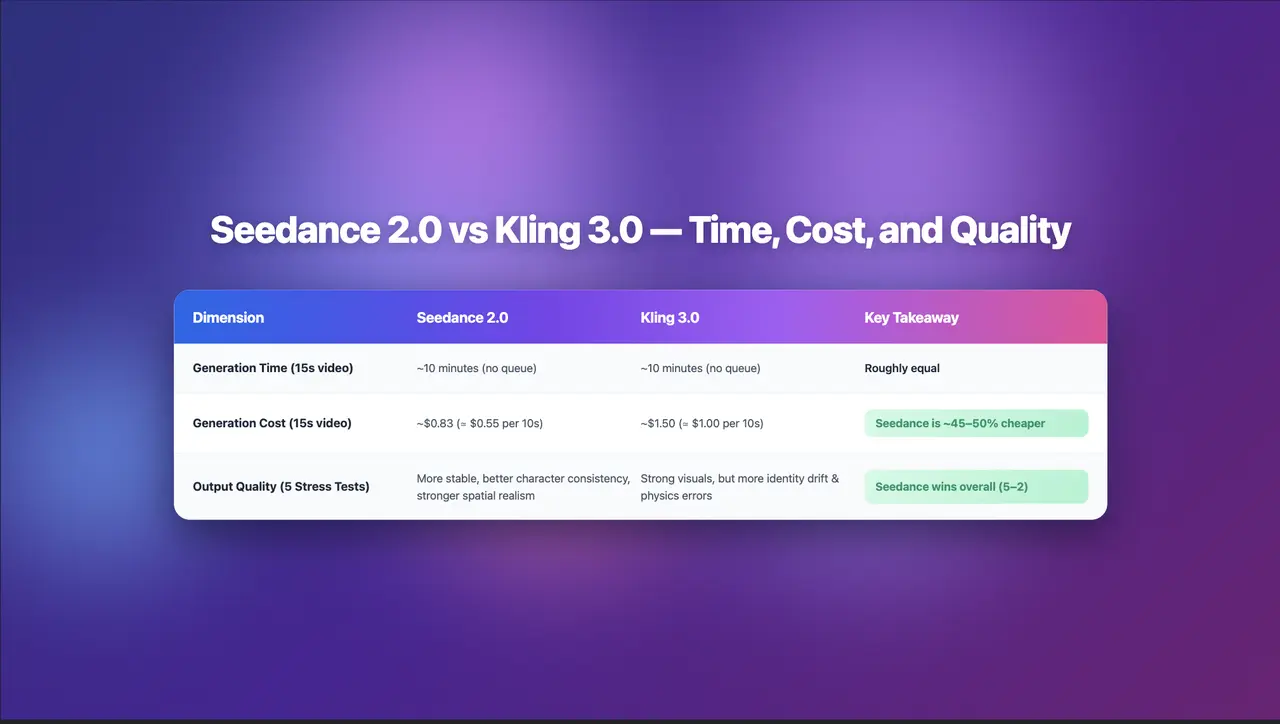
Seedance 2.0 Review: Stress-Testing Character Consistency Across 5 Extreme AI Video Scenarios
Seedance 2.0 recently launched a low-key update claiming to solve multi-angle continuity, smooth transitions, and consistent characters. To see whether it lives up to the hype, I ran five extreme stress tests, using the same prompts across Seedance 2.0 and Kling 3.0.
By Kitty 一 Jan 12, 2026- AI Video
- Text-to-Video
- Image-to-Video
- seedance 2.0
- X
- Youtube
- Discord