


Uncensored AI Image Generator: Which Models Offer More Freedom?
Searching for an uncensored AI image generator can mean several things. You might want more room for dark fantasy, unconventional fashion, or challenging editorial concepts.
- AI Image Generator
- GPT Image 2.5
Searching for an uncensored AI image generator can mean several things. You might want more room for dark fantasy, unconventional fashion, or challenging editorial concepts. You might want a private workflow with more control over how images are produced. Some people use the term specifically to mean a generator that permits adult content.
Those are different requirements—and a website advertising “no limits” does not tell you which ones it actually meets.
The most defensible answer is that locally deployed, open-weight models can offer more operational control than hosted image generators. That does not make every open model unrestricted, or prove that it accepts more types of content. Among major options, Stable Diffusion and selected FLUX releases give users deployment choices. Midjourney, GPT Image, Nano Banana, and hosted Seedream services should not be described as universally uncensored.
Here is how to compare these choices—and how to choose a model for everyday creative work in DreamFace.
Research checked September 20, 2026. This comparison uses published documentation and policies, not a hands-on refusal-rate benchmark.
What Does “Uncensored” Actually Mean?
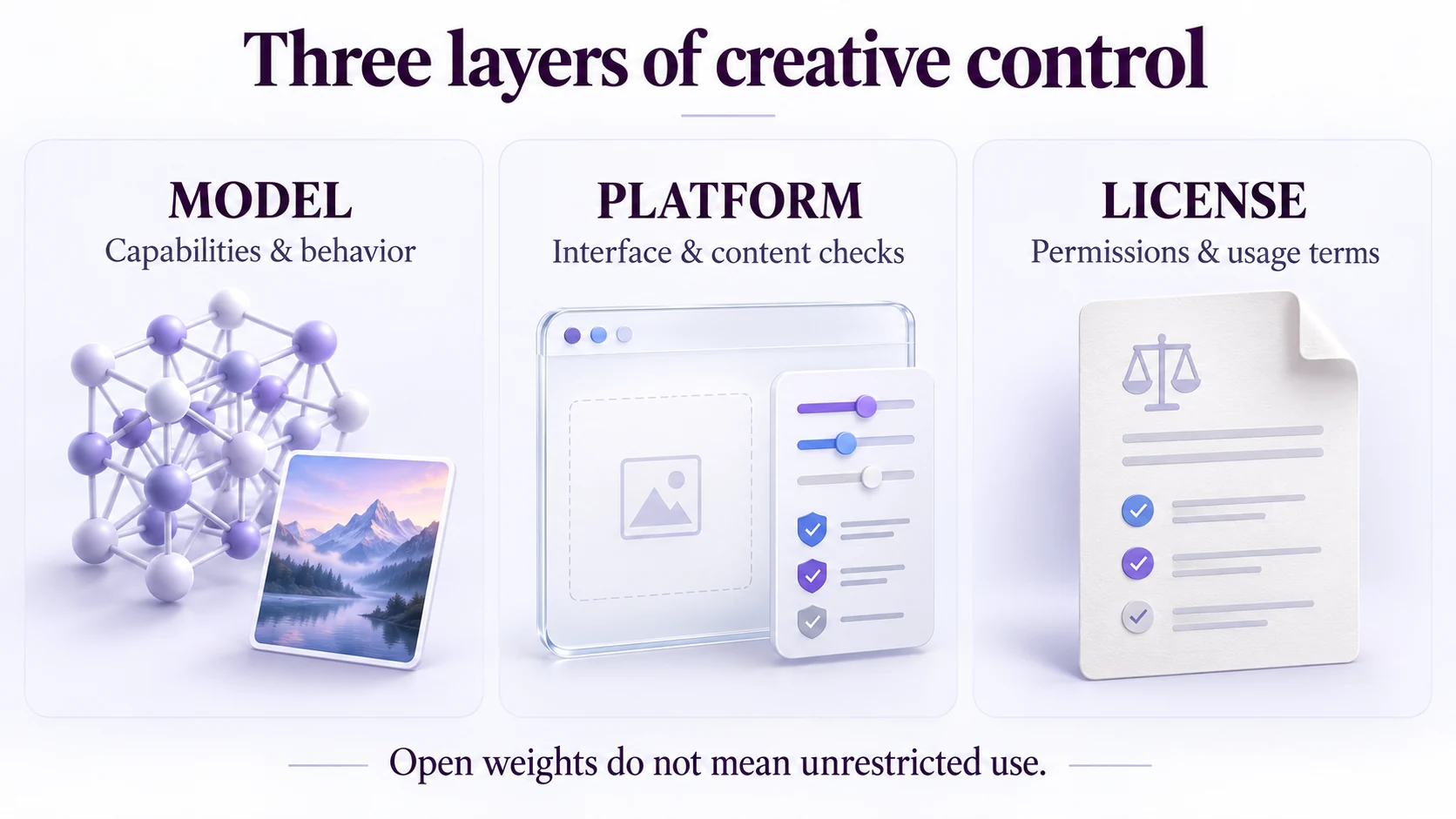
“Uncensored” is a marketing term, not a standardized model feature. Before comparing generators, separate three layers:
- The model: Its training and behavior affect what it can produce and how closely it follows a prompt.
- The service: A website or API can apply its own input checks, output filters, and account rules.
- The license and usage terms: Downloadable weights do not automatically grant permission for every use.
A model running on your own hardware and the same model offered through a website may therefore give you different experiences. More deployment control, broader artistic range, and permission to create sensitive content are separate questions.
For example, a horror illustration, a medical diagram, and explicit adult imagery should not be treated as one content category. Ask whether a service supports your actual project rather than relying on a general “uncensored” label.
Major AI Image Models Compared
The table below summarizes deployment and documented restrictions. It is not a ranking of how often models refuse prompts.
| Model or family | Where the flexibility comes from | Is “uncensored” an accurate description? |
|---|---|---|
| Stable Diffusion / SDXL | Downloadable weights and customizable local workflows | More deployment control; restrictions depend on the specific release, license, and host |
| FLUX | Selected open-weight releases, alongside hosted models | Some versions are self-deployable; the family still has usage restrictions |
| Midjourney | A managed image-creation environment | No: its community rules explicitly require SFW content |
| GPT Image 2 / 2.5 | Generation, instruction following, and image editing | No: OpenAI documents filtering of prompts and outputs |
| Nano Banana Pro / Nano Banana 2 | Reference-based generation and editing | No: Google’s prohibited-use rules apply |
| Seedream 5.0 Pro / 4.5 | Design-oriented generation and reference-based work | No verified basis to call them uncensored; check the service offering them |
The official sources supporting each distinction are linked below.
1. Stable Diffusion and SDXL: More Control Over Your Workflow
Stable Diffusion is relevant to this search because releases such as SDXL provide downloadable model weights and support local execution. You can choose your production environment instead of relying exclusively on one hosted interface. The official SDXL model card documents the model, its license, and its limitations.
This makes local Stable Diffusion a reasonable option to investigate when your priority is customization, repeatable workflows, or keeping processing within your own environment.
However, calling the entire ecosystem “uncensored” is too broad. A base model, a third-party adaptation, and an online service using that model are not interchangeable. Check the terms for the exact release. Stability’s published acceptable-use policy also addresses self-hosting under its named licenses and prohibits categories including sexual acts and extreme gore.
Practical takeaway: More control over deployment is a real benefit. Universal permission to generate anything is not an established benefit.
The trade-off is operational work: hardware capacity, installation, storage, and maintenance become part of your creative process. Consider whether those responsibilities help your project enough to justify them.
2. FLUX: Check the Version, Not Just the Family Name
FLUX includes multiple products with different deployment options. For example, Black Forest Labs lists FLUX.2 [dev] as an open-weight model, alongside hosted variants. That distinction matters more than a blanket claim that “FLUX is uncensored.” See the official FLUX.2 overview.
Open weights can give a team more control over where inference happens and how a model fits into production. Hosted FLUX services remain subject to the rules of their provider.
Black Forest Labs also publishes a usage policy covering its models and derivatives, including restrictions on non-consensual intimate imagery, abusive depictions of real people, and deceptive uses. The absence of a particular phrase from a policy is not proof that a service will accept a given request.
Practical takeaway: Selected FLUX releases offer deployment flexibility. Evaluate the specific version, license, and hosting service before making claims about its content boundaries.
3. Midjourney: Explicitly a SFW Service
Midjourney is not an appropriate example of an uncensored AI image generator. Its community guidelines require SFW content and restrict adult imagery and gore.
An important detail: those rules also apply in private servers, direct messages, and Stealth Mode. Privacy settings change visibility; they do not remove the service’s content rules.
Practical takeaway: Consider Midjourney when its creative workflow suits your project. Do not choose it expecting private generation to provide an unrestricted mode.
4. GPT Image: Editing Control Within a Moderated Service
GPT Image 2 and GPT Image 2.5 belong in this comparison because creative control is often what users actually need when they search for fewer restrictions.
OpenAI describes GPT Image 2.5 Sunburst as a model for generation and editing where precision matters, while GPT Image 2.5 Flare emphasizes fast, high-quality everyday generation.
That is a capability distinction, not a difference between censored and uncensored products. OpenAI’s image-generation documentation states that prompts and generated images are filtered.
Practical takeaway: Evaluate GPT Image for the work you need—such as following a detailed brief or refining an existing image—rather than expecting a no-filter service.
For a campaign designer, the meaningful test might be whether an edit preserves the product’s shape and printed wording. A model that completes that task reliably may be more useful than one advertised primarily through its lack of restrictions.
5. Nano Banana Pro and Nano Banana 2: Flexible Image Work, With Rules
Google’s image-generation documentation distinguishes Nano Banana 2 as a general-purpose option and Nano Banana Pro as a choice for more complex visual work. Reference images, consistency, and editing are relevant strengths to evaluate.
Neither should be marketed as an uncensored model. Google’s Generative AI Prohibited Use Policy restricts categories including sexually explicit content and harmful activities.
Practical takeaway: Compare these models for reference handling, composition, and the type of changes you need. Their creative capabilities do not establish broader permission for sensitive content.
6. Seedream: Design Capabilities Are Not Evidence of Fewer Filters
ByteDance presents Seedream 5.0 Pro around professional image creation, including information graphics and interactive editing. Seedream 4.5 is another model to consider when comparing image-generation workflows.
These product descriptions do not establish that either model is uncensored. A service offering Seedream may impose its own checks, and a model’s ability to create realistic imagery says little about what that service permits.
Practical takeaway: Assess Seedream for your design brief. Without service-specific evidence, claims that it is less restrictive than GPT Image or Nano Banana are speculation.
So, Which Options Are Relatively Less Restricted?
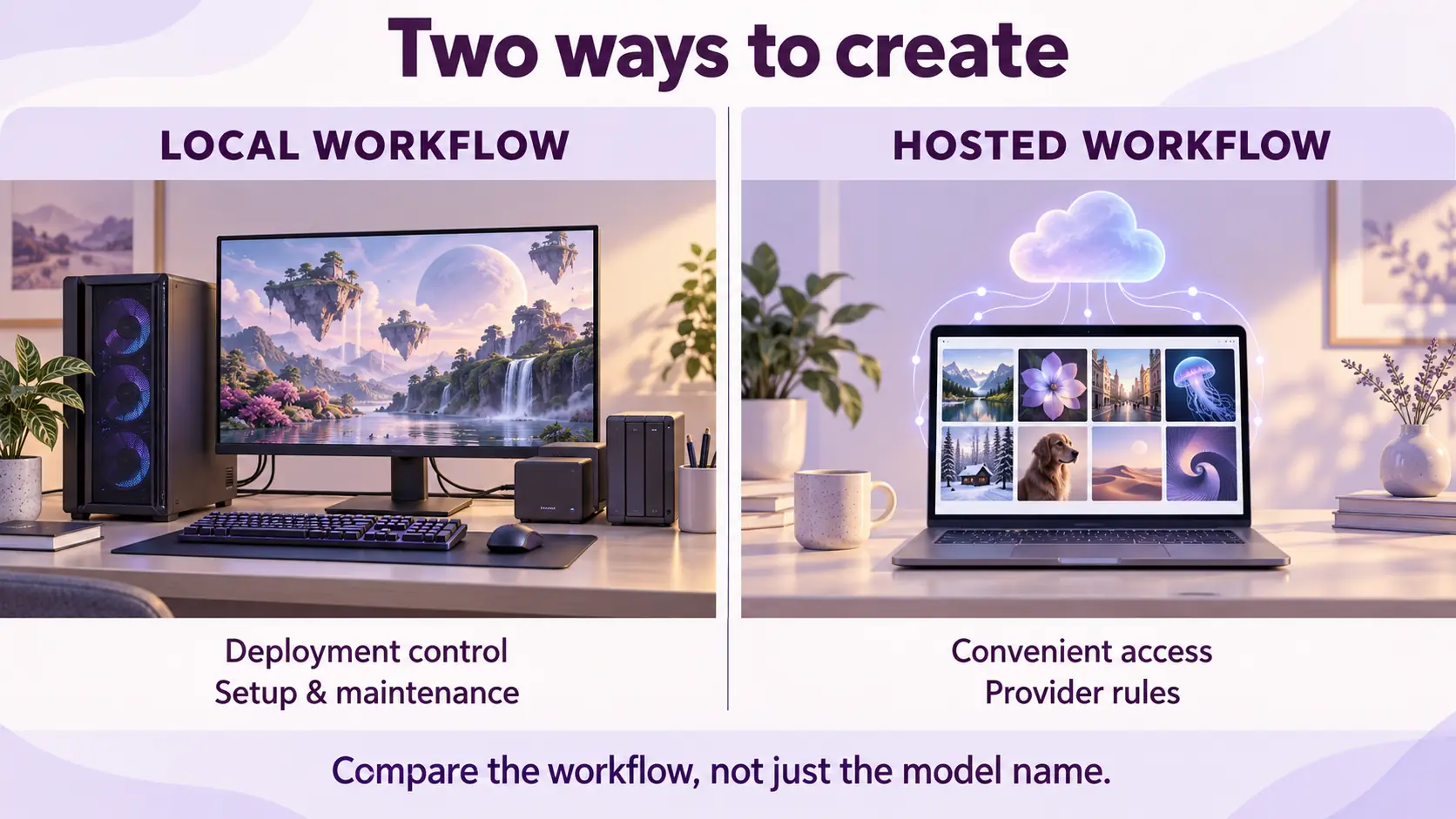
If you mean less dependence on a single hosted platform, local Stable Diffusion workflows and selected open-weight FLUX releases are the clearest options discussed here.
If you mean fewer refusals for a particular content category, the available documentation does not support a universal winner. That requires a defined category, a specific version and service, and a controlled evaluation.
If you mean permission to generate explicit adult content, none of the mainstream hosted options reviewed here should be assumed to provide it. Check the provider’s current rules rather than treating “open,” “private,” or “realistic” as equivalent to permission.
For many creators, the better buying question is: Which model gives me the most usable results for the images I actually publish?
How to Compare Models for a Real Project
Build a small set of representative, permitted briefs. Include a portrait, a product image, a composition with text, and an edit using a reference you have permission to use.
Then compare:
- Brief accuracy: Are the subject, layout, and required words correct?
- Reference preservation: Does the result retain the details you intended to keep?
- Revision effort: How many attempts are needed before the image is usable?
- Total cost: What did the accepted result cost, including unsuccessful attempts?
- Workflow fit: Can you comfortably repeat the process for a series?
Keep the prompt and output format as consistent as each interface allows. Record technical failures separately from content refusals and ordinary visual mistakes; they are different problems.
Explore Multiple AI Image Models in DreamFace
If your goal is more creative choice without managing a local installation, DreamFace lets you explore several image models from one interface.
The DreamFace model selection includes Dream Image 2.0, GPT Image 2.5 Sunburst, GPT Image 2.5 Flare, GPT Image 2, Seedream 5.0 Pro, Seedream 4.5, Nano Banana Pro, and Nano Banana 2. Available options and settings may change.
Use the following as a starting shortlist, then compare actual results:
| Your project | Models to try in DreamFace |
|---|---|
| An initial image concept | Dream Image 2.0 |
| An edit where detail preservation matters | GPT Image 2.5 Sunburst |
| Everyday generation with speed as a priority | GPT Image 2.5 Flare |
| A detailed brief or reference-based composition | GPT Image 2 |
| A design-led image or information-rich visual | Seedream 5.0 Pro |
| An alternative visual treatment for the same brief | Seedream 4.5 |
| Complex work guided by reference images | Nano Banana Pro |
| General-purpose image creation and reference work | Nano Banana 2 |
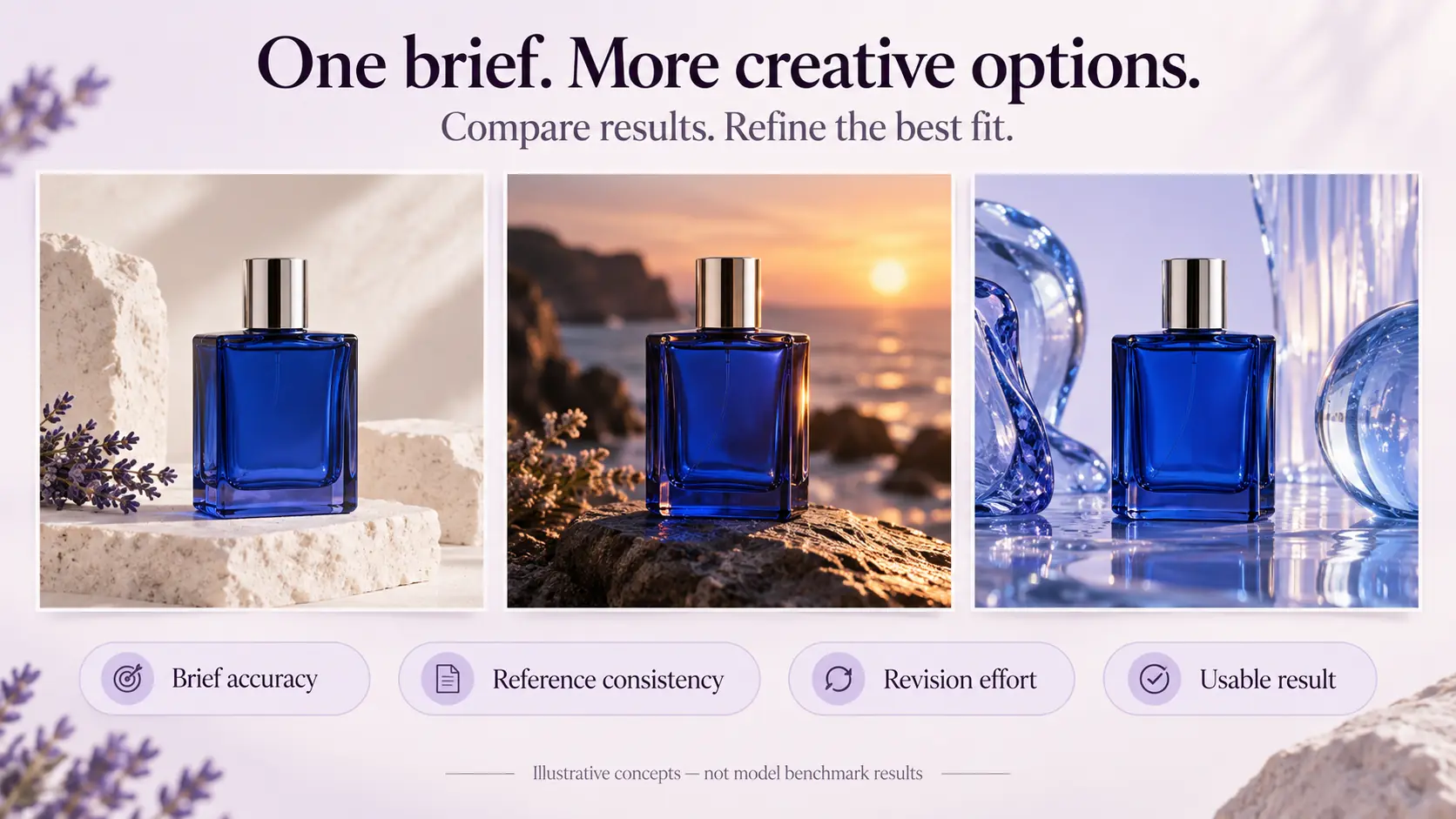
These are task-based suggestions, not a ranking of moderation strictness. DreamFace and its model providers may apply content rules.
Start with a clear idea, choose a model, and inspect the first result. Compare a second option when you need a different visual interpretation, then refine the image that best matches your brief.
Try DreamFace AI Image and find the model that fits your next creative project.
FAQ
Is there a completely uncensored AI image generator?
There is no standardized certification for “uncensored.” Local models can offer more operational control, but licenses, applicable rules, and model behavior still matter. Treat universal “anything goes” claims cautiously.
Is Stable Diffusion less restrictive than Midjourney?
A local Stable Diffusion workflow gives you more deployment control than Midjourney’s managed service. Midjourney explicitly requires SFW content. Whether a particular Stable Diffusion release permits a specific use is a separate question.
Does open-weight mean open-source or unrestricted?
No. Access to model weights does not, by itself, establish a permissive software license, unrestricted commercial use, or unrestricted content permissions. Read the terms for the exact model.
Is DreamFace an uncensored AI image generator?
DreamFace is a multi-model creative platform. Access to different image models provides more creative options, but it should not be interpreted as a promise of unfiltered generation or acceptance of every prompt.
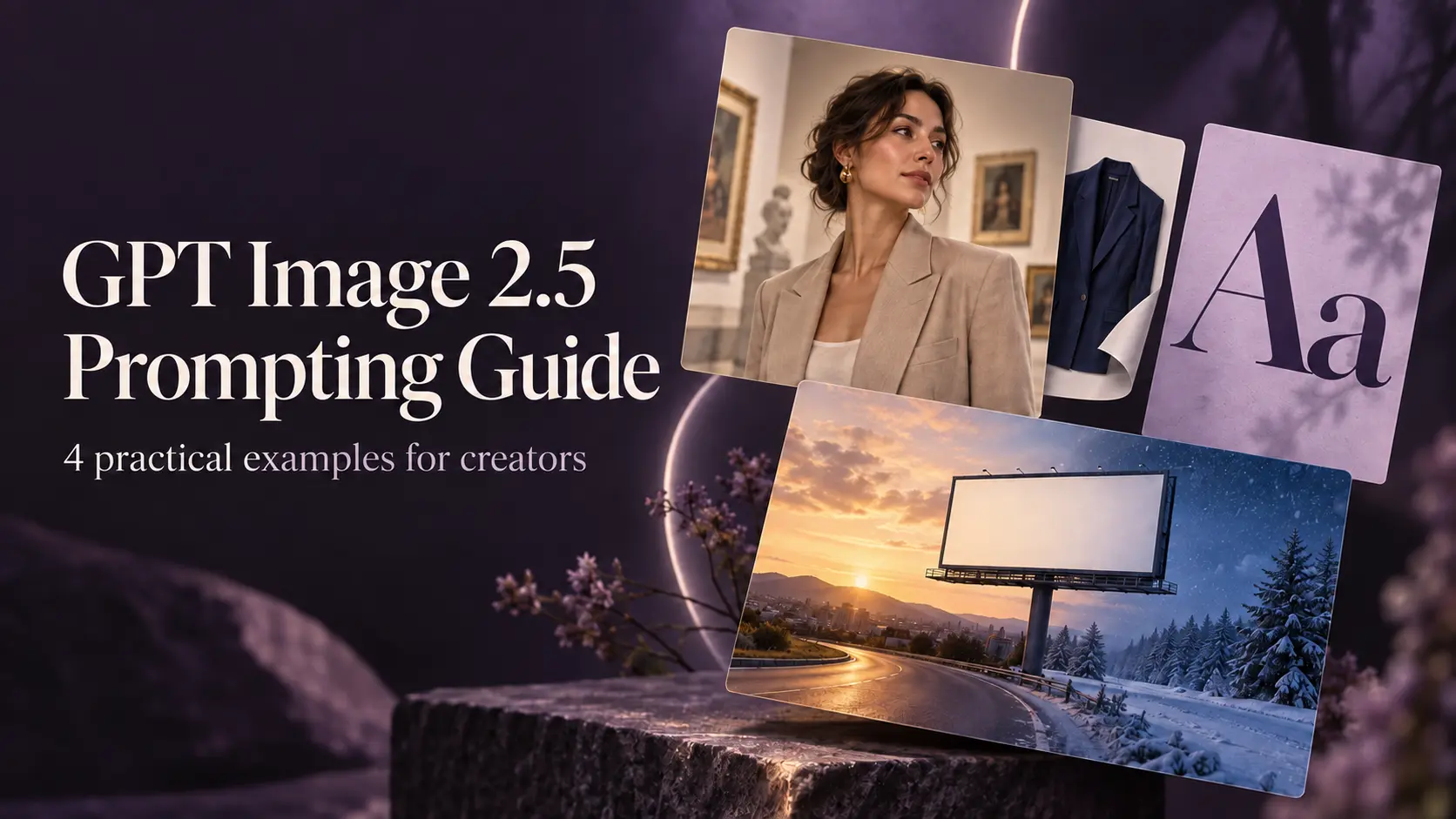
GPT Image 2.5 Prompting Guide: 4 Real Examples for Creators
A campaign image can look beautiful and still miss the brief. The headline might compete with a face, a product diagram might become unreadable on mobile, or an outfit edit might change more than the clothes.
By Skylar一Sep 18, 2026- Text-to-Image
- AI Image Generator
- GPT Image 2.5
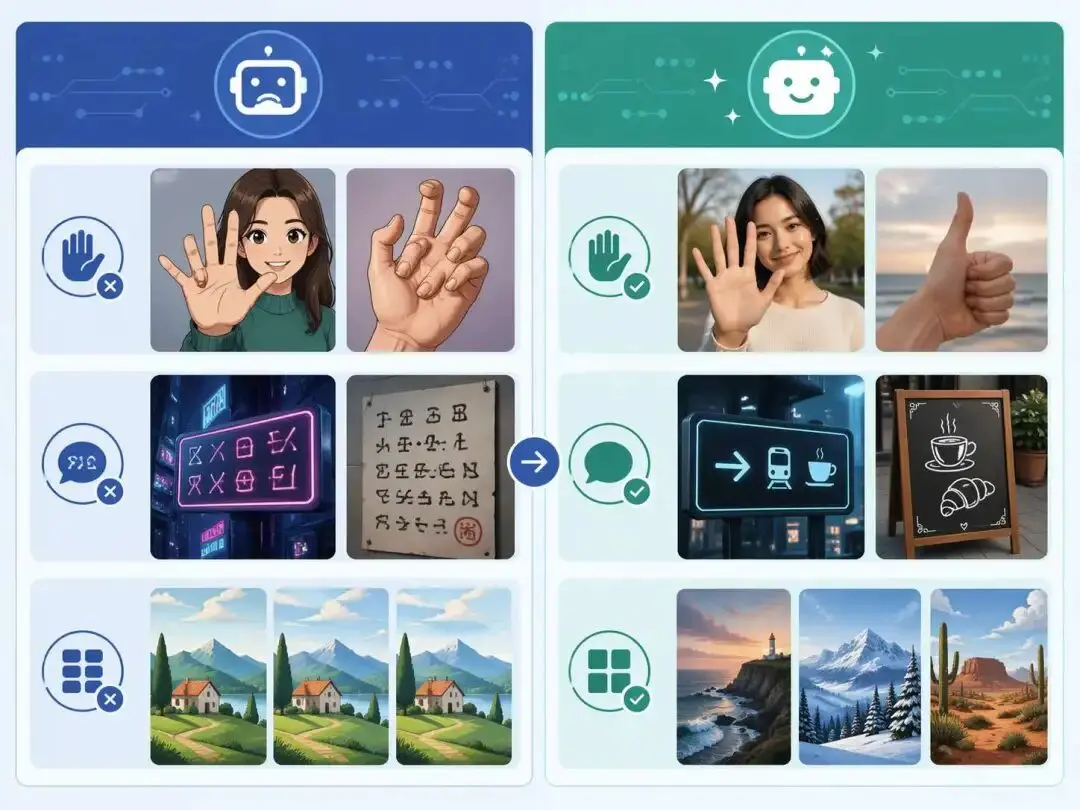
ChatGPT Image 2 Review: Real Tests Reveal What Actually Changed
If you’ve used AI image generators before, you already know the frustration. Hands often look unnatural, text turns into gibberish, and prompts keep getting longer while results remain inconsistent. For a long time, AI image generation felt less like using a tool and more like playing a lottery.
By Zoe一Apr 23, 2026- GPT Image 2
- AI Image Generator
- GPT-4o Image
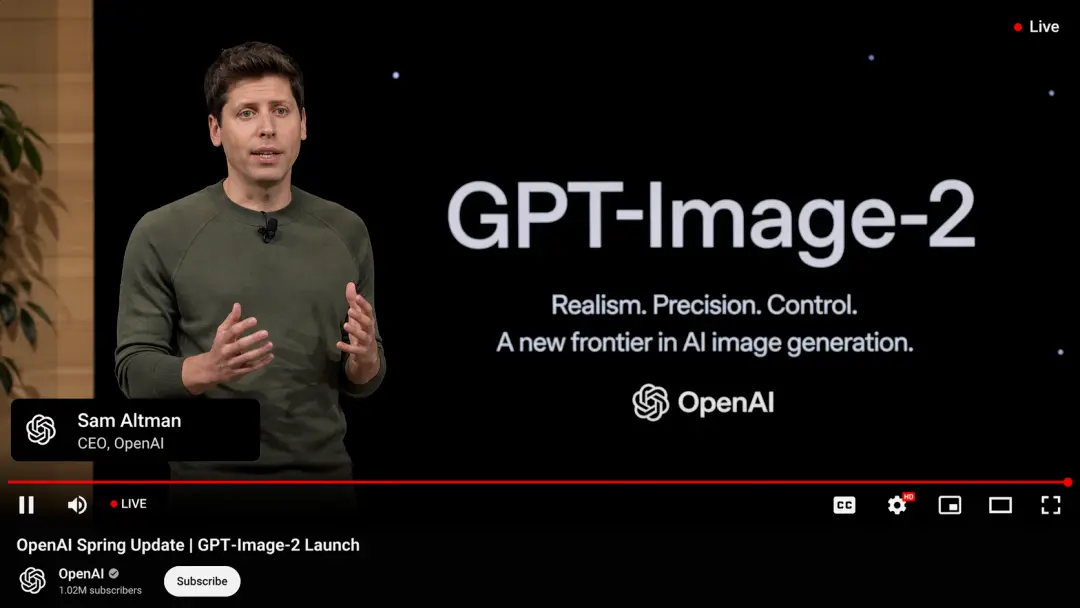
GPT Image 2 Is Here — And It’s Redefining What “Real” Means on the Internet
The arrival of GPT Image 2 didn’t just improve AI image generation — it completely disrupted it. In fact, many users are already saying it outright: GPT Image 2 crushes Nano Banana 2. And they’re not exaggerating.
By Adeline一Apr 21, 2026- GPT-4o Image
- AI Image Generator
- GPT Image 2