


Where to Try HappyHorse-1.0: Verified Access Guide
See where HappyHorse-1.0 is publicly accessible today, which options are hosted workspaces, and what still lacks clean release-level verification.
- AI Video
- AI Video Generator
- HappyHorse

HappyHorse-1.0 is publicly accessible today, but mostly through hosted platforms and workspaces rather than through one clean, well-documented public release path. The clearest live entry points are HappyHorses, happyhorse1.video, Topview, and Jupa, yet those pages do not all describe the model in the same way or offer the same level of provenance.
The practical takeaway is simple. If your goal is to generate a video now, you have options. If your goal is to verify a stable, public, release-level record for HappyHorse-1.0, the public evidence is still uneven.
Quick decision block
- Use HappyHorses or happyhorse1.video if you want the fastest path to a first result. HappyHorses exposes a live text-to-video workflow with reference image, video, and audio inputs plus synced audio generation, while happyhorse1.video says users can start generating before signing up and keep working inside its workspace.
- Use Topview if you care more about comparing outputs than about using a single “pure” endpoint. Its Happy Horse page explicitly frames access as part of a wider subscription that includes other supported models.
- Treat Jupa as a commercial access page, not a full public documentation source. It strongly advertises “exclusive access,” but the public FAQ section visible on the page is skeletal rather than explanatory.
- Wait for cleaner evidence if what you really want is model-release certainty. Artificial Analysis currently shows a placeholder-style HappyHorse family page, while its public Text-to-Video leaderboard page is led by Kling 3.0 1080p (Pro), not by a clearly documented HappyHorse listing.
Where you can actually try HappyHorse-1.0 today
HappyHorses
HappyHorses is the most direct hosted workflow I could verify. Its live page shows prompt entry, reference images, reference video, reference audio, and a “Generate Audio” option for synced output, which makes it a real place to try a HappyHorse-branded workflow rather than a purely descriptive landing page.
What makes HappyHorses useful also makes it easy to misread. The page explicitly says HappyHorse is a video-generation capability inside the HappyHorses platform, “not a standalone model offering,” and available as part of the platform rather than as a separately distributed model service. It also says users do not need their own GPU or deployment setup.
happyhorse1.video
happyhorse1.video is better understood as a workspace access page than as a source-of-truth release page. It describes HappyHorse-1.0 as the engine and its own service as the studio, says users can start generating before sign-up, and emphasizes that HappyHorse-1.0 sits alongside other leading video models inside one interface.
That is useful for creators. It reduces friction and makes time-to-first-output short. It does not, by itself, prove that the public release path for the model is as mature as the marketing copy implies.
Topview
Topview is the clearest option for teams that want to compare HappyHorse-1.0 with other models in one place. Its page says users can try Happy Horse 1.0 free on Topview and access Happy Horse plus other supported models under one subscription.
That makes Topview a workflow choice rather than a provenance choice. It is attractive for agencies, social teams, and marketers who care about output comparison, approval flow, and subscription consolidation more than about whether the model’s public release record is cleanly documented elsewhere.
Jupa
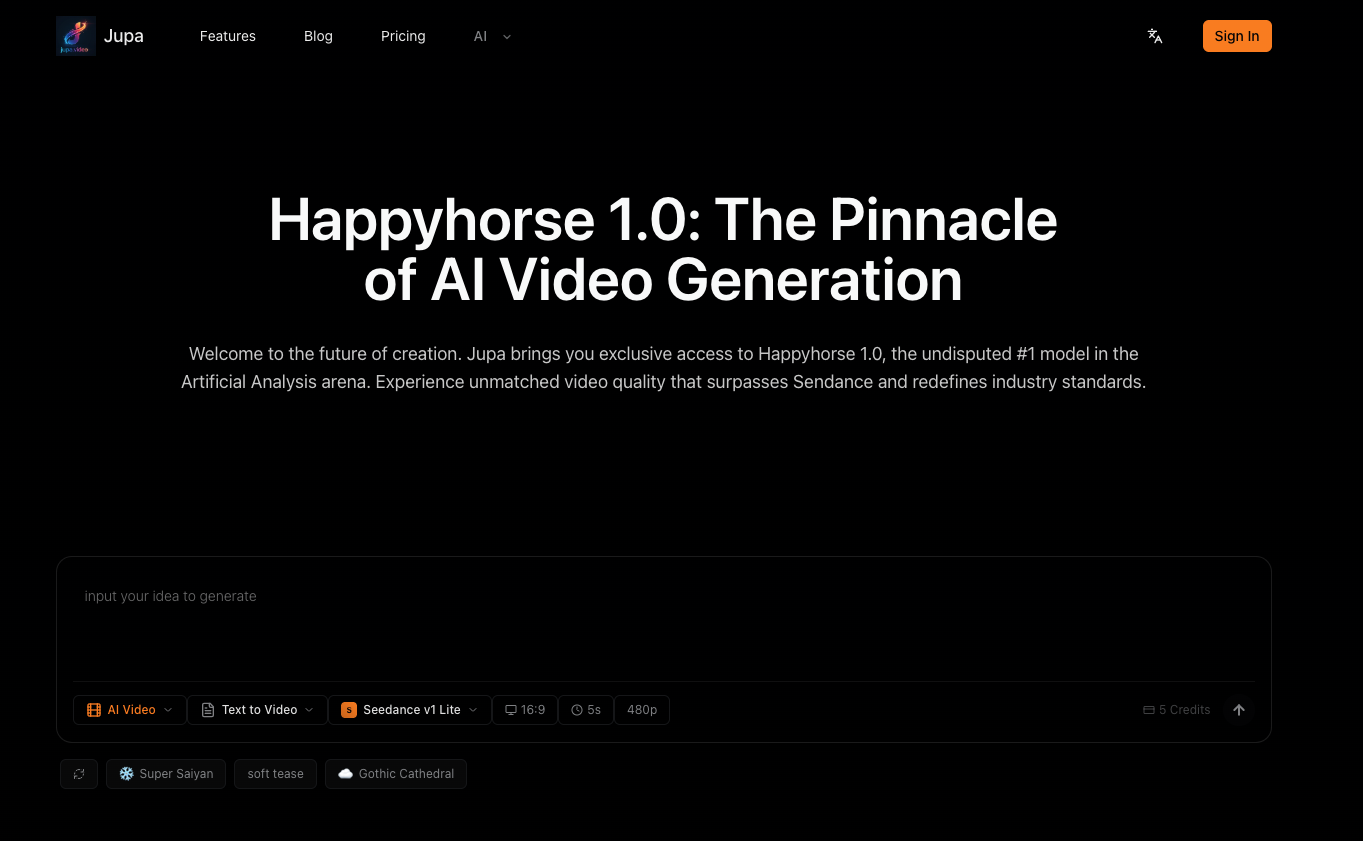
Jupa takes the strongest sales stance. Its page says Jupa brings users “exclusive access” to Happyhorse 1.0 and presents the model as a top-ranked option.
What the page does not do is back that positioning with much public documentation. The visible FAQ structure includes questions such as “Is Happyhorse publicly available?” but the answers are not actually populated in the fetched page content. For readers trying to verify availability rather than just click through, that is a meaningful weakness.
What these access points do and do not prove
The strongest verified claim is that HappyHorse-1.0 is accessible through hosted interfaces. That is supported by multiple live pages across HappyHorses, happyhorse1.video, Topview, and Jupa.
The weaker claim is that all of those entry points should be treated as evidence of the same thing. They should not. A hosted workflow proves that you can use a HappyHorse-labeled generation path. It does not automatically prove open weights, stable public repo availability, or a clean official release chain.
That distinction matters more here than it does for many other AI tools because the public descriptions conflict. The live HappyHorses platform page says HappyHorse is not a standalone model offering and that the company does not claim ownership of the underlying AI model technologies. Yet the same domain is indexed with copy that presents Happy Horse 1.0 as an official open-source, self-hostable model with clone and deployment instructions.
What is verifiable, and what is still shaky
Based on the public record, the most reliable conclusion is that HappyHorse-1.0 has strong hosted availability and weak release-level clarity. That is a narrower claim than saying the model is unavailable. It is also more defensible.
One reason for caution is that the indexed Happy Horse page includes a GitHub clone command for github.com/happy-horse/happyhorse-1, but that repository URL returned a 404 when checked. That does not prove the project lacks a release plan. It does show that at least one publicly surfaced path to a repo was not live when verified.
A second reason is inconsistency in the public specs. The indexed Happy Horse page on the HappyHorses domain presents seven lip-sync languages, while happyhorse1.video describes six languages on its live page. That is not a minor detail when access and release status are already fuzzy.
A third reason is the benchmark trail. Artificial Analysis currently serves a HappyHorse family page that says “More details coming soon,” which is much thinner than the confident #1 language used on several landing pages. At the same time, the public Text-to-Video leaderboard page I reviewed is led by Kling 3.0 1080p (Pro), not by a clearly documented HappyHorse entry. The stronger interpretation is that public benchmark evidence has not caught up with the marketing language around access pages.
Which route makes sense for your workflow
Choose HappyHorses if your priority is the fastest platform-native path and you do not want to manage infrastructure. Its own copy is very clear that the service is SaaS-first and meant for direct use inside the platform.
Choose happyhorse1.video if you want a low-friction workspace that starts from a landing page and carries work into an account environment. That is especially sensible for solo creators who care more about generating than about source provenance.
Choose Topview if your real job is model comparison, not model purity. Its value proposition is the ability to use Happy Horse alongside other supported models under one subscription, which is often the more practical workflow for teams.
Choose caution if you are specifically looking for open weights, stable repo access, or a single authoritative benchmark trail. Public access exists. Public certainty is weaker.
My recommendation
If you want to try HappyHorse-1.0 today, use one of the hosted or workspace routes and treat that as exactly what it is: access. HappyHorses and happyhorse1.video are the shortest path to hands-on use, while Topview is the strongest choice for teams comparing multiple models.
If you are writing about HappyHorse-1.0, the safer phrasing is that it is publicly accessible through hosted platforms. That is stronger, more accurate, and easier to defend than saying the model already has a cleanly verified open public release path.
FAQ
Is HappyHorse-1.0 publicly available today?
Yes, but mostly through hosted platforms and workspaces rather than through one clearly documented public release path. The most visible options are HappyHorses, happyhorse1.video, Topview, and Jupa.
Can I try HappyHorse-1.0 without self-hosting?
Yes. HappyHorses explicitly says users do not need their own GPU or deployment setup, and happyhorse1.video says users can start generating before signing up.
Is HappyHorse-1.0 clearly verified as an open-source public release?
Not cleanly, based on the public record I could verify. One indexed page presents Happy Horse 1.0 as open-source and self-hostable, but the live HappyHorses platform page says HappyHorse is not a standalone model offering, and a surfaced GitHub repo path returned 404.
Which access page is best for teams?
Topview is the best fit if your team wants side-by-side model choice under one subscription. Its Happy Horse page explicitly frames access as part of a broader multi-model workspace.
Should I trust “#1 on Artificial Analysis” claims at face value?
No. Those claims should be cross-checked against current public Artificial Analysis pages, and the public record is mixed right now: the HappyHorse family page is still a placeholder, while the current public text-to-video leaderboard is led by Kling 3.0 1080p (Pro).
.webp)
DreamFace AI Live Avatar: Always-On AI Character Livestreaming
Turn any character into an always-on live streaming host — from talk shows and quizzes to memorial tributes and late-night companionship — with no one required behind the camera.
By Daniel一Aug 18, 2026- AI Video
- AI Live Avatar
Best AI Video Generator 2026: Why Multi-Model AI Platforms Are Winning
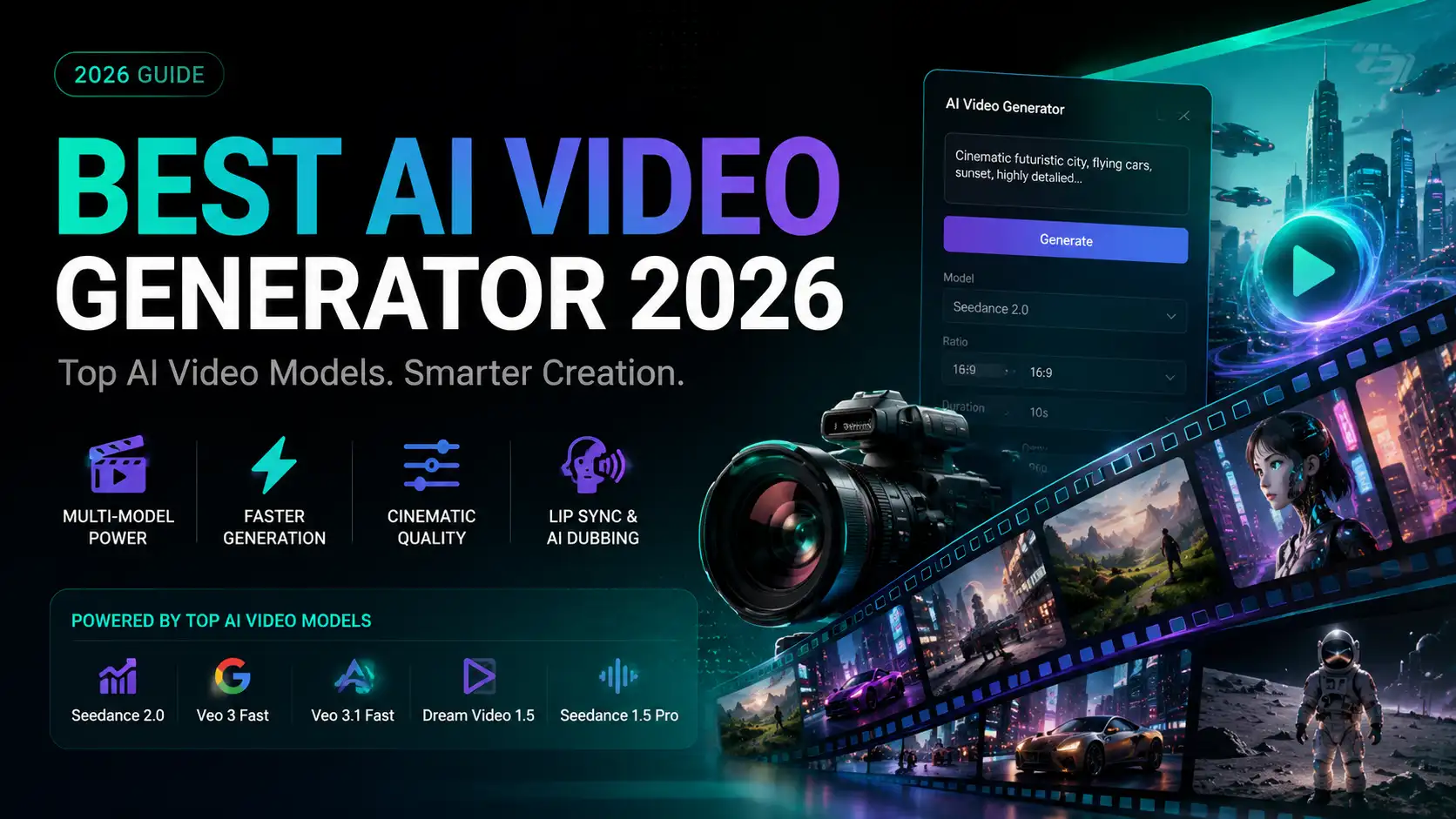
AI video generation has entered a completely new era in 2026. What started as short experimental clips has rapidly evolved into cinematic storytelling, AI anime production, virtual influencers, talking avatars, and fully AI-generated social media content.
By Bentley一May 26, 2026- AI Video Generator
- AI Video

Seedance 2.1 Is Coming: Better Quality, Lower Costs, and a Big Boost for AI Storytelling
The AI video generation race has slowed down a bit recently. Earlier this year, new models were launching almost every week, pushing image and video generation forward at an incredible pace. After the buzz around GPT Image models, the industry has been waiting for the next major leap in AI video.
By stxph一May 23, 2026- AI Video
- Seedance 2.1
- Seedance 2.0