
'%3e%3cg%3e%3cpath%20d='M12.04834,6.05824C12.09325,4.8457799999999995,12.43703,3.78081,13.0715,2.89055C13.7092,1.995784,14.7633,1.3601670000000001,16.2063,1C16.215899999999998,1.0440338,16.2259,1.088092,16.2363,1.131979L16.2363,1.3623509999999999C16.2363,1.884725,16.1084,2.48372,15.856,3.14258C15.5915,3.78052,15.1781,4.38093,14.6291,4.92281C14.1157,5.40028,13.6406,5.71638,13.2207,5.85928C13.0822,5.9003,12.89209,5.94066,12.66255,5.97701C12.45842,6.00853,12.25362,6.03563,12.04834,6.05824ZM12.28933,7.85741C10.6594,7.85741,9.52778,6.42896,7.91997,6.42896C6.31224,6.42896,3,7.89332,3,12.9488C3,18.0043,5.94131,21.2617,6.27029,21.642C6.599209999999999,22.0224,7.36005,23,8.5387,23C9.71744,23,11.00787,22.0715,12.28933,22.0715C13.5707,22.0715,15.1836,23,16.2365,23C17.2895,23,17.7226,22.5747,18.4392,21.8411C19.1558,21.1074,20.5227,18.8686,21,17.5248C20.2137,17.061,18.1298,15.8019,18.1298,12.9488C18.1298,11.0468,18.831200000000003,9.4667,20.2341,8.20853C19.3138,7.02216,18.2464,6.42896,17.0318,6.42896C15.2099,6.42896,13.9193,7.85741,12.28933,7.85741Z'%20fill='%23000000'%20fill-opacity='1'/%3e%3c/g%3e%3c/g%3e%3c/svg%3e)
'%3e%3cg%3e%3cpath%20d='M6.2985500000000005,2L14.60082,10.81153L16.7432,8.537289999999999C13.81573,6.65184,9.89484,4.122529999999999,8.13152,2.985321L6.95017,2.225593C6.74135,2.090554,6.5177700000000005,2.0178354,6.2985500000000005,2ZM5.0312551,3.05499C5.0144537,3.1518100000000002,5,3.24911,5,3.35357L5,20.7675C5,20.8406,5.0138389,20.9085,5.0234395,20.9782L13.4695,12.0125L5.0312551,3.05499ZM18.1511,9.444659999999999L15.7321,12.0125L18.1089,14.5354C19.3682,13.7252,20.2405,13.1626,20.3372,13.1007C20.7653,12.8229,21.007,12.4039,20.9998,11.94614C20.9934,11.49683,20.7516,11.09514,20.340400000000002,10.84799C20.2484,10.79194,19.387999999999998,10.24048,18.1511,9.444659999999999ZM14.60082,13.2134L6.3235600000000005,22C6.48437,21.9703,6.64498,21.9194,6.79859,21.8209C7.01141,21.6833,12.76069,17.9805,16.701,15.4428L14.60082,13.2134Z'%20fill='%23000000'%20fill-opacity='1'/%3e%3c/g%3e%3c/g%3e%3c/svg%3e)

Best AI Video Generator 2026: Why Multi-Model AI Platforms Are Winning
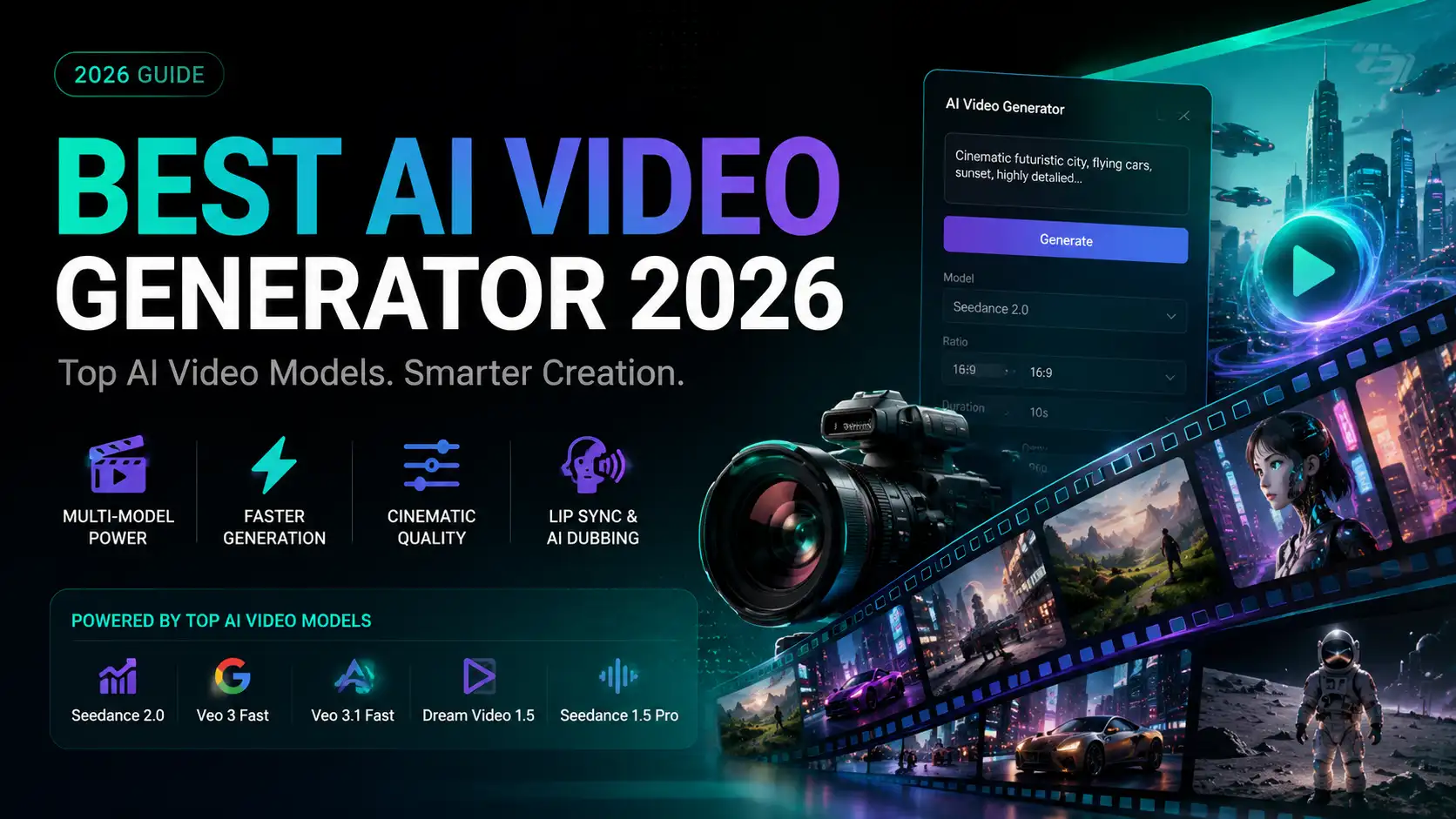
AI video generation has entered a completely new era in 2026. What started as short experimental clips has rapidly evolved into cinematic storytelling, AI anime production, virtual influencers, talking avatars, and fully AI-generated social media content.
- AI Video Generator
- AI Video
AI video generation has entered a completely new era in 2026.
What started as short experimental clips has rapidly evolved into cinematic storytelling, AI anime production, virtual influencers, talking avatars, and fully AI-generated social media content. Creators are no longer asking whether AI can generate videos — they are asking which platform delivers the best quality, speed, consistency, and creative flexibility.
As competition between AI models intensifies, one thing has become clear: the future of AI video creation does not belong to a single model. It belongs to platforms that combine multiple advanced AI models into one streamlined workflow.
That is why multi-model AI platforms like Dreamface are becoming increasingly important for creators, marketers, and AI storytellers.
The AI Video Industry Is Moving Beyond Single-Model Tools
In the early stage of AI video generation, most tools focused on a single capability:
- basic animation,
- short text-to-video clips,
- or simple motion generation.
But creator demands have changed dramatically.
Today’s AI creators need:
- cinematic storytelling,
- realistic motion,
- lip sync animation,
- anime-style generation,
- multi-scene consistency,
- and fast rendering for social platforms.
No single AI model currently dominates all of these areas.
Some models are stronger at storytelling. Others generate more realistic movement. Some prioritize speed, while others focus on cinematic quality or facial consistency.
This is why professional creators increasingly rely on platforms that provide access to multiple AI generation models instead of locking users into one system.
Why Seedance 2.0 Became One of the Most Discussed AI Video Models
Among the newest generation of AI video models, Seedance 2.0 has attracted significant attention from creators focused on cinematic AI storytelling.
Unlike many traditional text-to-video generators that struggle with scene continuity, Seedance focuses heavily on narrative structure, visual consistency, and multi-shot storytelling.
This makes it especially powerful for:
- AI anime creators,
- AI short drama production,
- cinematic TikTok videos,
- and long-form AI storytelling workflows.
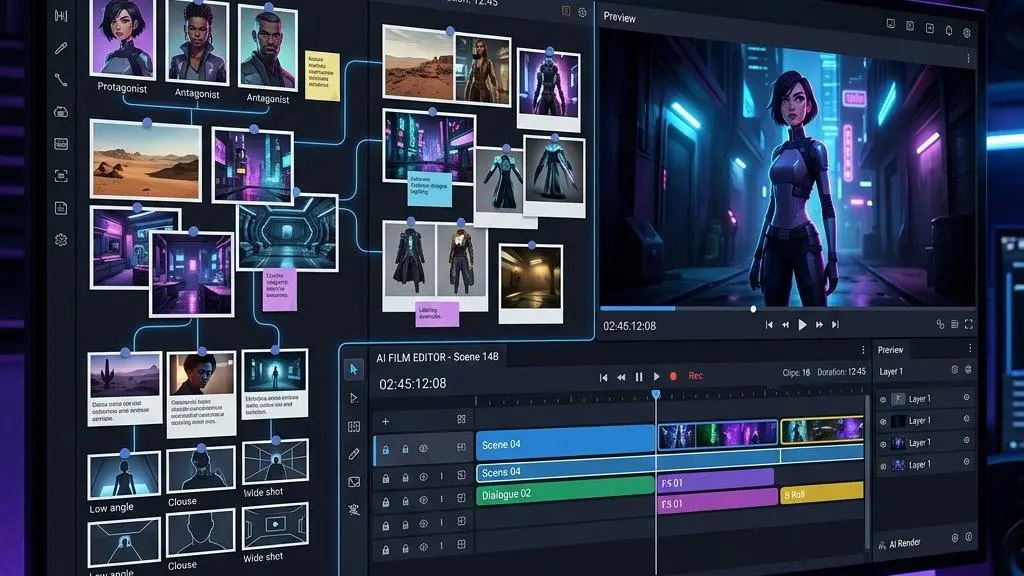
One of the biggest challenges in AI video generation is maintaining consistent characters across multiple scenes. Seedance performs particularly well in preserving facial appearance, visual atmosphere, camera transitions, and scene continuity, making it appealing for creators building story-driven content rather than isolated clips.
As AI-generated storytelling becomes more sophisticated, models optimized for narrative flow are becoming increasingly valuable.
Speed and Realism Are Driving the Next Generation of AI Video
While cinematic storytelling is important, speed remains critical for many creators.
Social media creators, advertising teams, and content agencies often need rapid video generation pipelines that can produce large volumes of content efficiently.
This is where models like Google Veo 3 Fast and Veo 3.1 Fast stand out.
Google’s Veo models focus heavily on:
- realistic motion,
- natural camera movement,
- polished visual quality,
- and faster rendering performance.
For creators producing TikTok campaigns, YouTube Shorts, social ads, and fast-turnaround marketing content, generation speed can be just as important as visual quality.
This is why many creators now combine cinematic models like Seedance with faster rendering models like Veo inside the same production workflow.
AI Lip Sync and Virtual Influencers Are Growing Rapidly
Another major trend shaping the AI industry in 2026 is the rise of AI influencers and talking avatars.
Platforms like TikTok, Instagram Reels, and YouTube Shorts are filled with:
- AI-generated personalities,
- dubbed avatar videos,
- virtual creators,
- and AI podcast clips.
To support this growing category, Dreamface includes models like Seedance 1.5 Pro, which focuses on lip synchronization and audio-driven facial animation.
This allows creators to generate:
- talking AI avatars,
- multilingual dubbed videos,
- AI podcast content,
- and animated social media personalities.
The rise of AI influencers is transforming content creation into a scalable production system where creators can publish videos continuously without traditional filming workflows.
Why Flexible AI Workflows Matter in 2026
Modern creators rarely produce content for just one platform.
A single video may need to appear on:
- TikTok,
- Instagram Reels,
- YouTube Shorts,
- Pinterest,
- or cinematic YouTube channels.
That means creators need flexible generation formats.
Dreamface supports multiple aspect ratios including:
- 1:1,
- 3:4,
- 4:3,
- 16:9,
- and 9:16.
This makes it easier to repurpose AI-generated content across platforms without rebuilding entire projects.
Beyond aspect ratio flexibility, creators increasingly want unified workflows where AI image generation and AI video generation work together seamlessly.
Instead of generating static images separately from videos, creators now want to:
- create AI characters,
- generate cinematic scenes,
- animate those visuals into video,
- and publish content immediately.
This type of integrated workflow is becoming essential for AI anime creators, cinematic storytellers, and social media creators alike.
The Best AI Video Generator in 2026 Is About Ecosystem, Not Just One Model
The AI video industry is evolving too quickly for any single model to dominate every category.
The strongest creator platforms are no longer defined by one isolated AI system. Instead, they are defined by:
- multi-model flexibility,
- cinematic quality,
- workflow efficiency,
- social media optimization,
- and scalable content creation.
This is why multi-model platforms are becoming the future of AI video generation.
Creators need the ability to switch between cinematic storytelling, realistic motion generation, lip sync animation, anime visuals, and fast rendering — all inside one ecosystem.
Dreamface is positioning itself directly within this next generation of AI creative workflows.
Final Thoughts
AI video generation in 2026 is no longer experimental technology.
It is becoming a mainstream content production pipeline used by creators, marketers, storytellers, anime studios, and virtual influencers around the world.
As models continue improving, the gap between traditional video production and AI-assisted creation will continue shrinking.
The platforms that succeed will be the ones that combine:
- powerful AI models,
- flexible creative workflows,
- and creator-focused tools inside one unified experience.
For creators looking to stay ahead of the next wave of AI content creation, Dreamface offers one of the most flexible AI video ecosystems available today.
Explore the latest AI video generation tools here: Dreamface AI Video Generator
.webp)
DreamFace AI Live Avatar: Always-On AI Character Livestreaming
Turn any character into an always-on live streaming host — from talk shows and quizzes to memorial tributes and late-night companionship — with no one required behind the camera.
By Daniel一Aug 18, 2026- AI Video
- AI Live Avatar
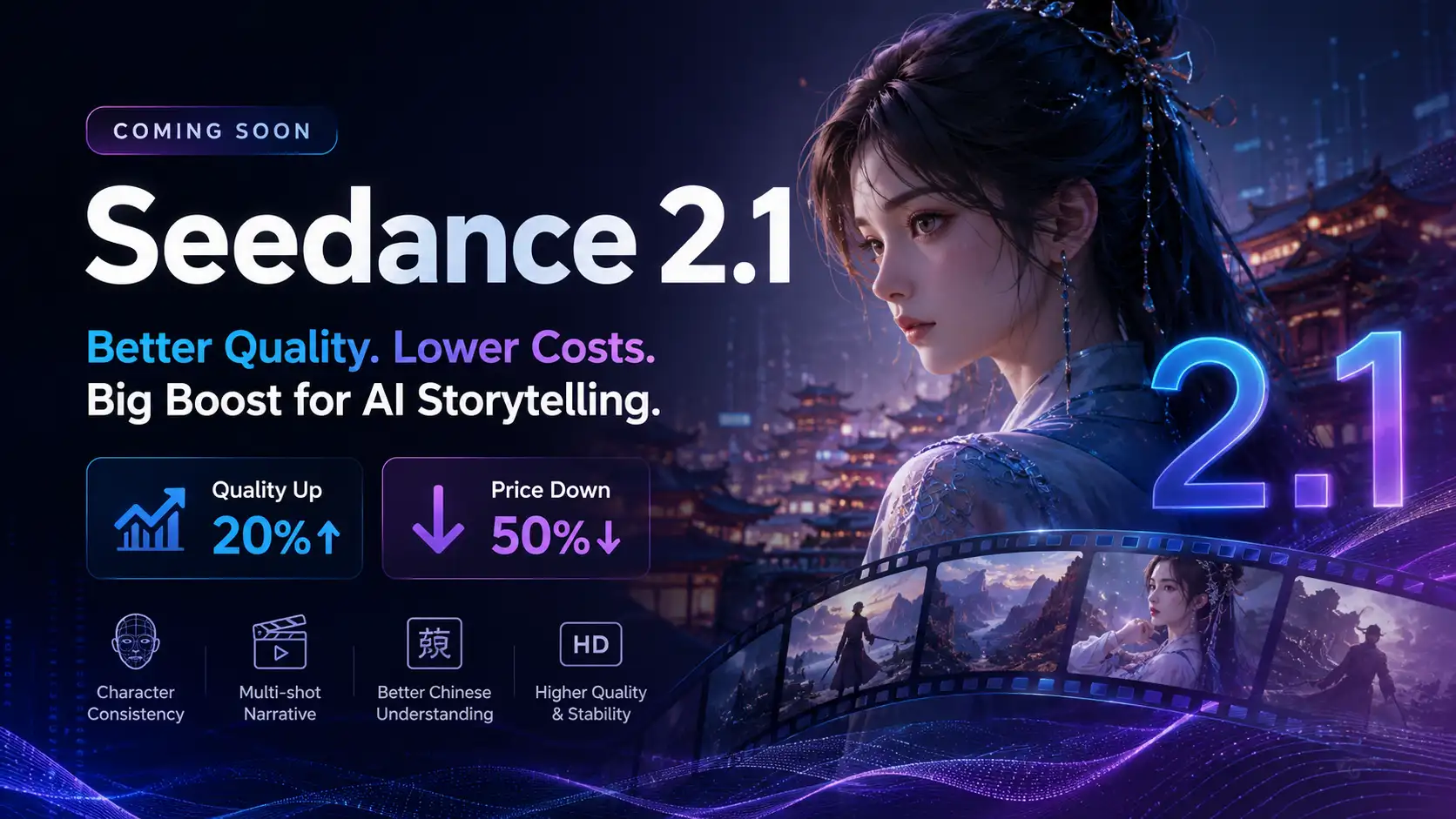
Seedance 2.1 Is Coming: Better Quality, Lower Costs, and a Big Boost for AI Storytelling
The AI video generation race has slowed down a bit recently. Earlier this year, new models were launching almost every week, pushing image and video generation forward at an incredible pace. After the buzz around GPT Image models, the industry has been waiting for the next major leap in AI video.
By stxph一May 23, 2026- AI Video
- Seedance 2.1
- Seedance 2.0
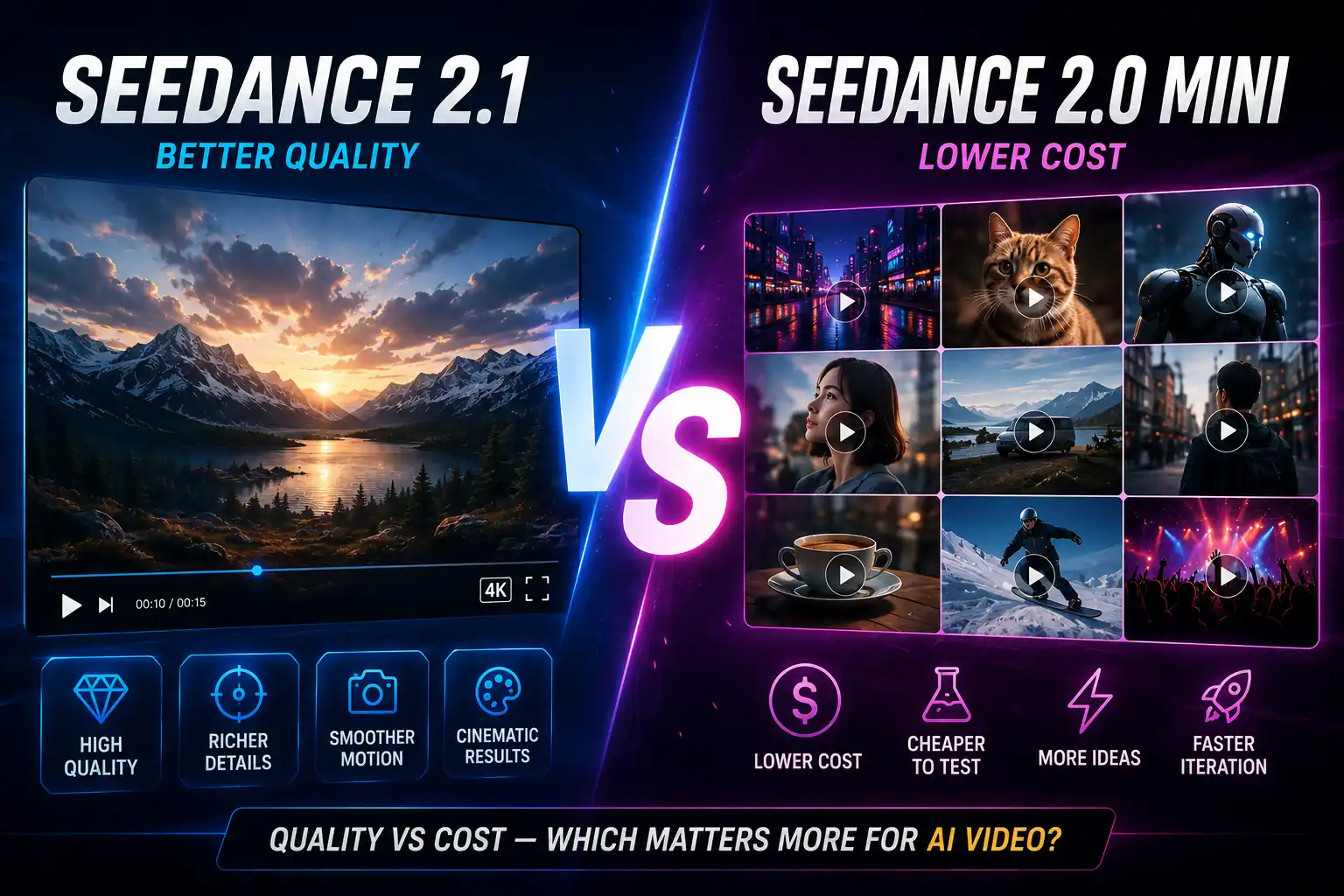
Seedance 2.1 vs Seedance 2.0 Mini: Quality or Cost?
Seedance 2.1 may push AI video quality higher, while Seedance 2.0 Mini could make testing and scaling video ideas cheaper.
By Levi一May 18, 2026- AI Video