
'%3e%3cg%3e%3cpath%20d='M12.04834,6.05824C12.09325,4.8457799999999995,12.43703,3.78081,13.0715,2.89055C13.7092,1.995784,14.7633,1.3601670000000001,16.2063,1C16.215899999999998,1.0440338,16.2259,1.088092,16.2363,1.131979L16.2363,1.3623509999999999C16.2363,1.884725,16.1084,2.48372,15.856,3.14258C15.5915,3.78052,15.1781,4.38093,14.6291,4.92281C14.1157,5.40028,13.6406,5.71638,13.2207,5.85928C13.0822,5.9003,12.89209,5.94066,12.66255,5.97701C12.45842,6.00853,12.25362,6.03563,12.04834,6.05824ZM12.28933,7.85741C10.6594,7.85741,9.52778,6.42896,7.91997,6.42896C6.31224,6.42896,3,7.89332,3,12.9488C3,18.0043,5.94131,21.2617,6.27029,21.642C6.599209999999999,22.0224,7.36005,23,8.5387,23C9.71744,23,11.00787,22.0715,12.28933,22.0715C13.5707,22.0715,15.1836,23,16.2365,23C17.2895,23,17.7226,22.5747,18.4392,21.8411C19.1558,21.1074,20.5227,18.8686,21,17.5248C20.2137,17.061,18.1298,15.8019,18.1298,12.9488C18.1298,11.0468,18.831200000000003,9.4667,20.2341,8.20853C19.3138,7.02216,18.2464,6.42896,17.0318,6.42896C15.2099,6.42896,13.9193,7.85741,12.28933,7.85741Z'%20fill='%23000000'%20fill-opacity='1'/%3e%3c/g%3e%3c/g%3e%3c/svg%3e)
'%3e%3cg%3e%3cpath%20d='M6.2985500000000005,2L14.60082,10.81153L16.7432,8.537289999999999C13.81573,6.65184,9.89484,4.122529999999999,8.13152,2.985321L6.95017,2.225593C6.74135,2.090554,6.5177700000000005,2.0178354,6.2985500000000005,2ZM5.0312551,3.05499C5.0144537,3.1518100000000002,5,3.24911,5,3.35357L5,20.7675C5,20.8406,5.0138389,20.9085,5.0234395,20.9782L13.4695,12.0125L5.0312551,3.05499ZM18.1511,9.444659999999999L15.7321,12.0125L18.1089,14.5354C19.3682,13.7252,20.2405,13.1626,20.3372,13.1007C20.7653,12.8229,21.007,12.4039,20.9998,11.94614C20.9934,11.49683,20.7516,11.09514,20.340400000000002,10.84799C20.2484,10.79194,19.387999999999998,10.24048,18.1511,9.444659999999999ZM14.60082,13.2134L6.3235600000000005,22C6.48437,21.9703,6.64498,21.9194,6.79859,21.8209C7.01141,21.6833,12.76069,17.9805,16.701,15.4428L14.60082,13.2134Z'%20fill='%23000000'%20fill-opacity='1'/%3e%3c/g%3e%3c/g%3e%3c/svg%3e)

Seedance 2.1 vs Seedance 2.0 Mini: Quality or Cost?
Seedance 2.1 may push AI video quality higher, while Seedance 2.0 Mini could make testing and scaling video ideas cheaper.
- AI Video
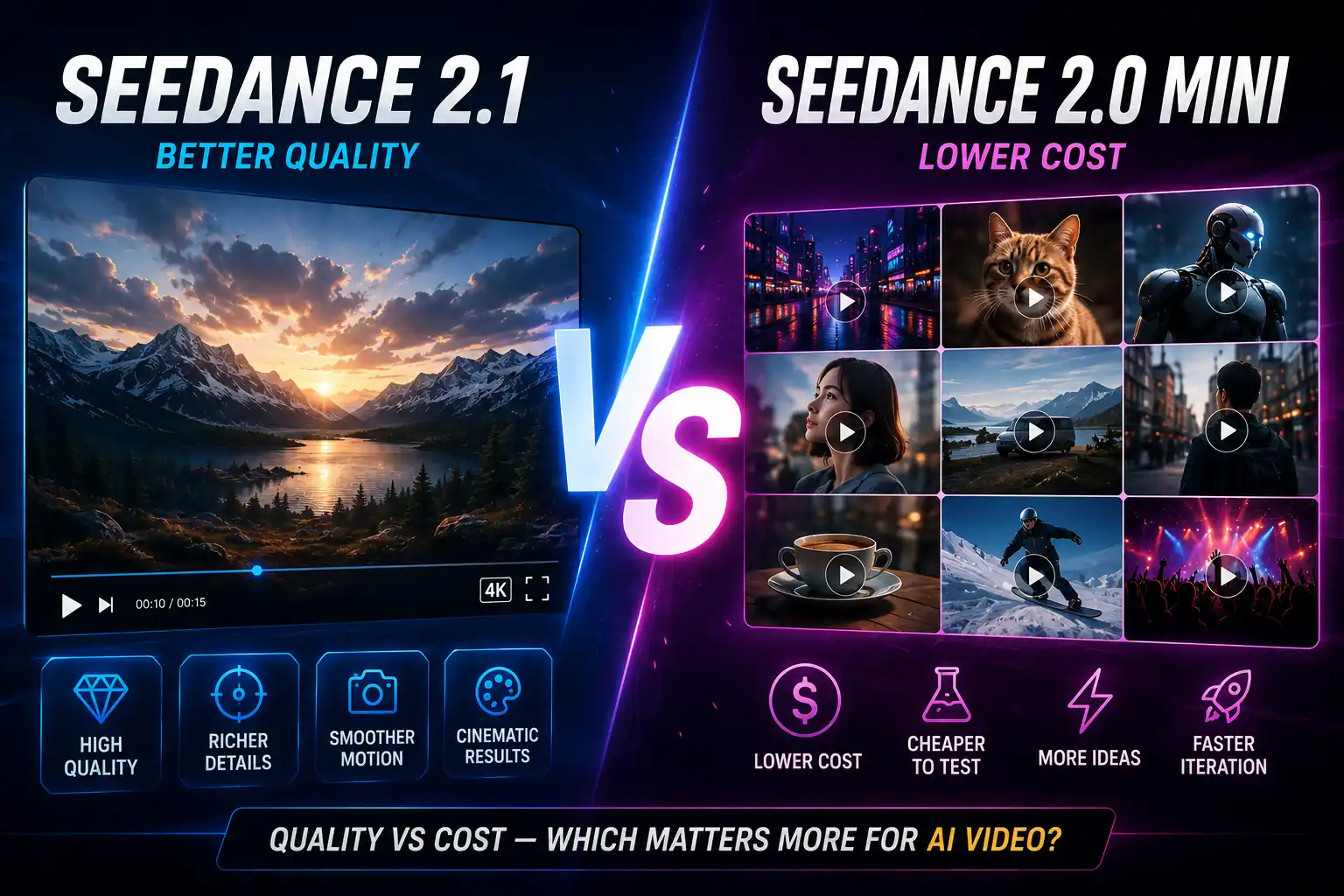
Seedance 2.1 and Seedance 2.0 Mini matter for different reasons.
Seedance 2.1 is the quality upgrade.
Seedance 2.0 Mini is the cost upgrade.
That difference is important. AI video teams do not only need better final clips. They also need cheaper ways to test prompts, hooks, camera moves, image references, and short-form video ideas.
So the real question is not only:
Which model is better?
The better question is:
Which model fits your workflow?
ByteDance’s public Seedance 2.0 page describes Seedance 2.0 as a multimodal audio-video generation model that supports text, image, audio, and video inputs. The Seedance 2.0 paper also documents Seedance 2.0 Fast as a low-latency accelerated version, with 4- to 15-second audio-video generation and native 480p / 720p output.
Because official public documentation for Seedance 2.1 and Seedance 2.0 Mini is still limited, teams should treat both as upcoming or reported variants until pricing, API behavior, model cards, and safety rules are clearly documented.
Quick verdict
| Need | Best fit |
|---|---|
| Best final video quality | Seedance 2.1 |
| Cheap prompt testing | Seedance 2.0 Mini |
| Low-latency production | Seedance 2.0 Fast |
| Stable baseline | Seedance 2.0 |
| Brand/IP-sensitive work | Wait for official rules |
Seedance 2.1 is likely the model to watch for polished outputs.
Seedance 2.0 Mini is the model to watch if your main problem is cost.
For most creators and marketing teams, Mini may be more important in daily use because AI video starts with testing, not final rendering.
What Seedance 2.1 is for
Seedance 2.1 should be judged by final output quality.
If the upgrade improves motion, scene consistency, face detail, camera control, lighting, and prompt accuracy, it will matter most for high-stakes videos.
That includes:
- brand campaign videos
- product demo clips
- cinematic social content
- music visuals
- polished image-to-video outputs
- final ad creatives
This is where quality matters more than cost.
When a team already knows the concept works, it wants the best version of that idea. Seedance 2.1 fits that role.
What Seedance 2.0 Mini is for
Seedance 2.0 Mini should be judged by cost per usable idea.
That is different from cost per generation.
A cheap model is only useful if it helps you find a usable direction faster. If Mini lets creators test more prompts, more hooks, more character movements, and more visual styles, it could become the default starting point for AI video work.
Mini would be useful for:
- early drafts
- prompt testing
- short-form video variations
- TikTok, Reels, and Shorts concepts
- ad creative experiments
- avatar video tests
- image-to-video exploration
- internal storyboards
Seedance 2.0 Mini does not need to be the best model in the lineup.
It only needs to be good enough for the first 80% of exploration.
Seedance 2.1 vs Seedance 2.0 Mini
| Comparison point | Seedance 2.1 | Seedance 2.0 Mini |
|---|---|---|
| Main value | Better quality | Lower cost |
| Best use | Final output | Drafts and testing |
| User type | Brands, studios, polished campaigns | Creators, marketers, growth teams |
| Workflow stage | End of production | Start of production |
| Main risk | May be more expensive | May be lower quality |
| Success metric | Best-looking final clip | Lowest cost per usable idea |
This is the clean way to think about it:
Use Mini to find the idea.
Use 2.1 to polish the idea.
That workflow is stronger than trying to use one model for everything.
Why cost may matter more than quality
AI video is a trial-and-error workflow.
Most people do not get the right video on the first generation. They need to adjust the prompt, change the image reference, try a different camera move, or test a new opening shot.
If every attempt is expensive, people test less.
If testing gets cheaper, people create differently.
That is why Seedance 2.0 Mini could matter. It could make AI video feel less like a one-shot render and more like a creative sandbox.
For creators, that means more versions before publishing.
For marketers, that means more ad angles before picking a winner.
For product teams, that means more demo concepts before spending budget on the final clip.
Where Seedance 2.0 Fast still fits
Seedance 2.0 Fast still matters if speed is the priority.
The Seedance 2.0 paper describes Fast as an accelerated version built for low-latency scenarios. That means Fast may remain useful for API workflows, production pipelines, and teams that care about response time.
Mini may be cheaper, but cheap is not enough.
Teams still need to compare:
- latency
- output quality
- queue time
- API stability
- retry rate
- consistency
- total cost per usable video
If Fast is still more reliable in production, it keeps a clear role.
If Mini is cheaper and close enough in quality, Fast will face pressure.
What this means for creators
For creators, the biggest change is simple: more attempts.
One photo can become five video directions.
One character can become ten motion tests.
One product image can become several short-form ad concepts.
That is especially useful for image-to-video and portrait-based workflows.
For Dreamface-style creator workflows, this matters because the creator can test more visual directions before choosing the final clip. Instead of treating every generation as the final output, the workflow becomes:
test → compare → choose → polish.
That is how AI video becomes easier to use in real content production.
What teams should check before switching
Do not switch models just because a name sounds newer or cheaper.
Before using Seedance 2.1 or Seedance 2.0 Mini at scale, compare them against your real workflow.
Check:
- final output quality
- cost per usable video
- generation speed
- prompt accuracy
- motion stability
- face and identity consistency
- image reference control
- API reliability
- copyright and likeness safety
The safety point matters. AP reported that Hollywood groups criticized Seedance 2.0 over alleged copyright and likeness issues, while ByteDance said it respects intellectual property rights and is strengthening safeguards.
If your workflow uses real people, celebrities, brand IP, copyrighted characters, or user-uploaded portraits, do not judge only by quality and price.
Wait for clear usage rules.
Simple recommendation
Use Seedance 2.0 Mini when you need cheap drafts, fast creative exploration, and more prompt attempts.
Use Seedance 2.0 Fast when speed and low latency matter more than cost.
Use Seedance 2.1 when the final video needs better quality and polish.
Use Seedance 2.0 as the stable baseline until newer variants are fully documented.
Wait if your workflow involves likeness rights, copyrighted characters, brand IP, or sensitive user images.
FAQ
What is Seedance 2.1?
Seedance 2.1 is expected to be a quality-focused upgrade in the Seedance video model family. Until official documentation is public, it should be treated as an upcoming or reported model rather than a fully documented public release.
What is Seedance 2.0 Mini?
Seedance 2.0 Mini is expected to be a lighter, lower-cost Seedance variant. Its main value would be cheaper testing, drafting, and creative exploration.
Is Seedance 2.0 Mini better than Seedance 2.0 Fast?
Not necessarily. Mini may be better for lower-cost testing, while Fast may still be better for low-latency production. Teams should compare speed, stability, quality, and total cost per usable video.
Should creators use Seedance 2.1 or Seedance 2.0 Mini?
Creators should use Mini for early ideas and 2.1 for final polish if both models launch as expected. Mini helps creators test more directions, while 2.1 helps improve the final clip.
Why does Seedance 2.0 Mini matter?
Seedance 2.0 Mini matters because cheaper generation changes creative behavior. When testing costs less, creators can try more ideas, reject weak versions faster, and spend final-quality generation only on the best concepts.
Final take
Seedance 2.1 and Seedance 2.0 Mini are not competing for the same job.
Seedance 2.1 raises the quality ceiling.
Seedance 2.0 Mini lowers the cost floor.
For polished final videos, Seedance 2.1 may matter more.
For everyday creative work, Seedance 2.0 Mini may matter more.
The strongest workflow is not choosing one forever. It is using each model at the right stage: Mini for exploration, Fast for speed, 2.1 for polish, and Seedance 2.0 as the stable baseline.
.webp)
DreamFace AI Live Avatar: Always-On AI Character Livestreaming
Turn any character into an always-on live streaming host — from talk shows and quizzes to memorial tributes and late-night companionship — with no one required behind the camera.
By Daniel一Aug 18, 2026- AI Video
- AI Live Avatar
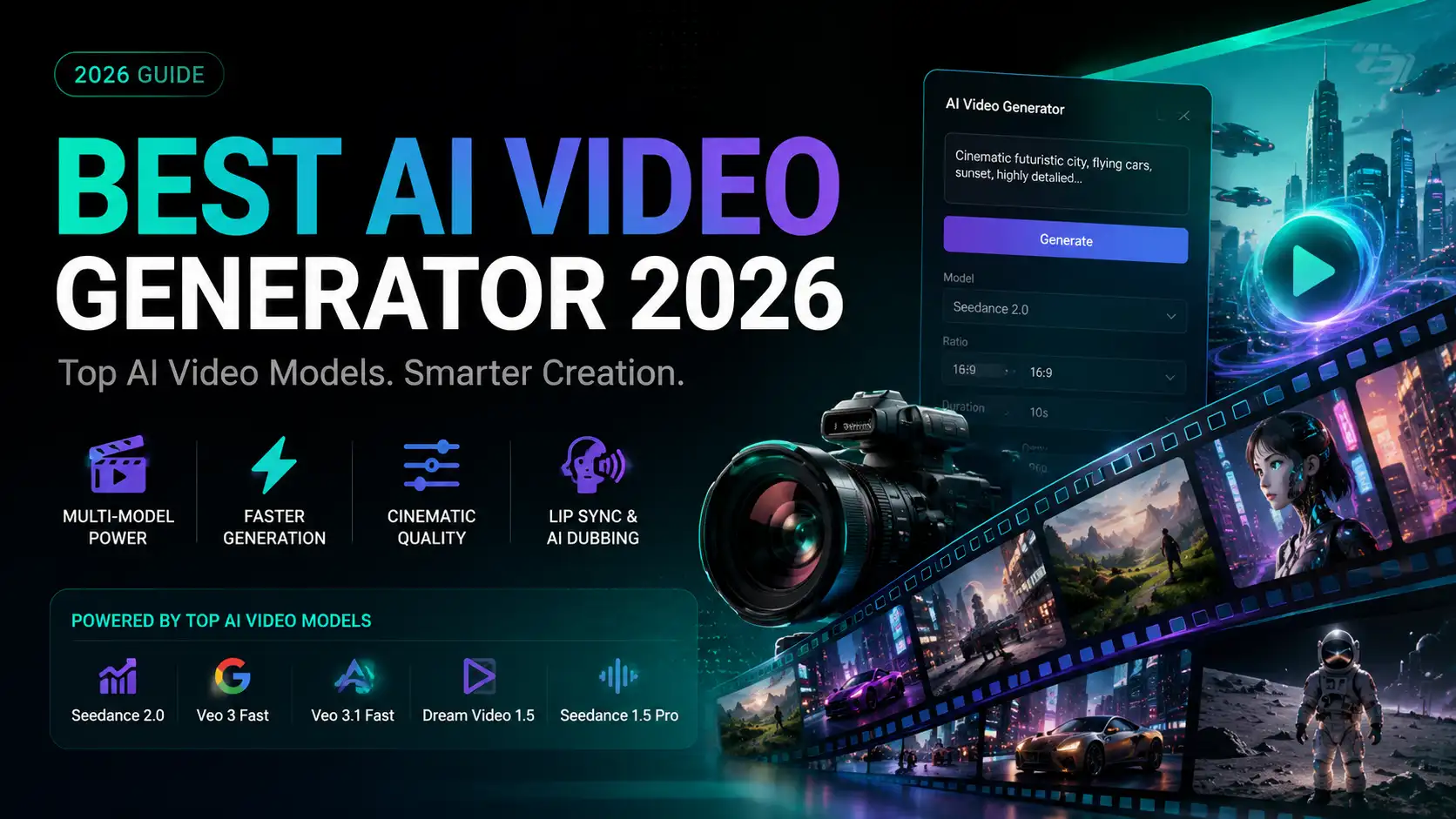
Best AI Video Generator 2026: Why Multi-Model AI Platforms Are Winning
AI video generation has entered a completely new era in 2026. What started as short experimental clips has rapidly evolved into cinematic storytelling, AI anime production, virtual influencers, talking avatars, and fully AI-generated social media content.
By Bentley一May 26, 2026- AI Video Generator
- AI Video
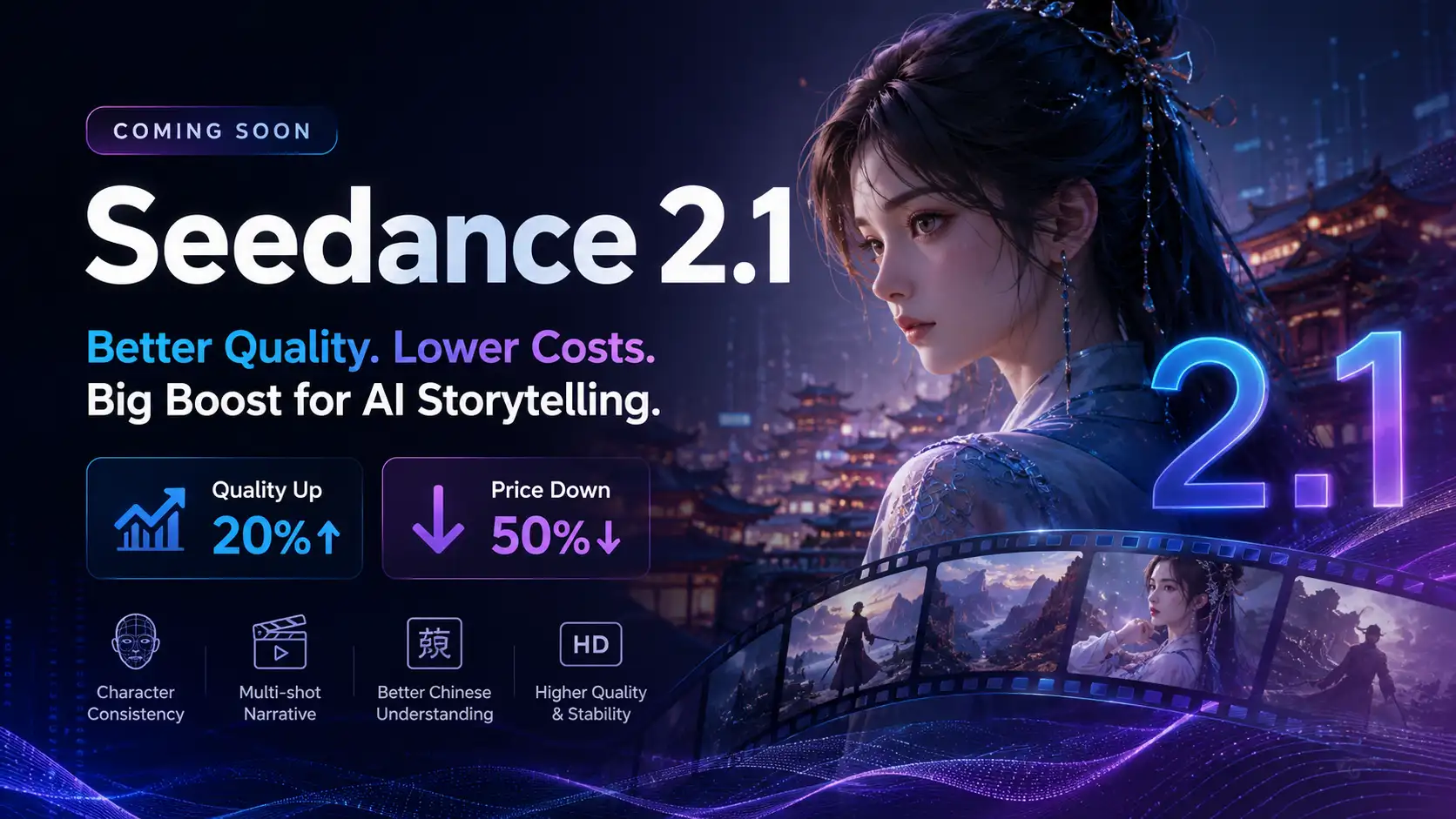
Seedance 2.1 Is Coming: Better Quality, Lower Costs, and a Big Boost for AI Storytelling
The AI video generation race has slowed down a bit recently. Earlier this year, new models were launching almost every week, pushing image and video generation forward at an incredible pace. After the buzz around GPT Image models, the industry has been waiting for the next major leap in AI video.
By stxph一May 23, 2026- AI Video
- Seedance 2.1
- Seedance 2.0